



Nigeria’s reputation as one of the foremost footballing countries in Africa is not debatable. Despite a recent lull in continental trophies and a worrying continued absence at the World Cup, the Super Eagles of Nigeria have an undoubtedly rich history and one of the best football squads in Africa.
In the memory of the Nigerian Super Eagles’ illustrious 81-year-old history, we at Box18Naija have decided to curate the greatest Super Eagles teams in history and explore which team is really the best.
It is often said that legends grow taller with the telling, but in the world of football, there’s scarcely a need for tales. The proof is always in the pudding. Walk with us down memory lane as we relive some of your favorite Super Eagles teams and the story behind their greatness.
The Pioneers (1976 to 1984)
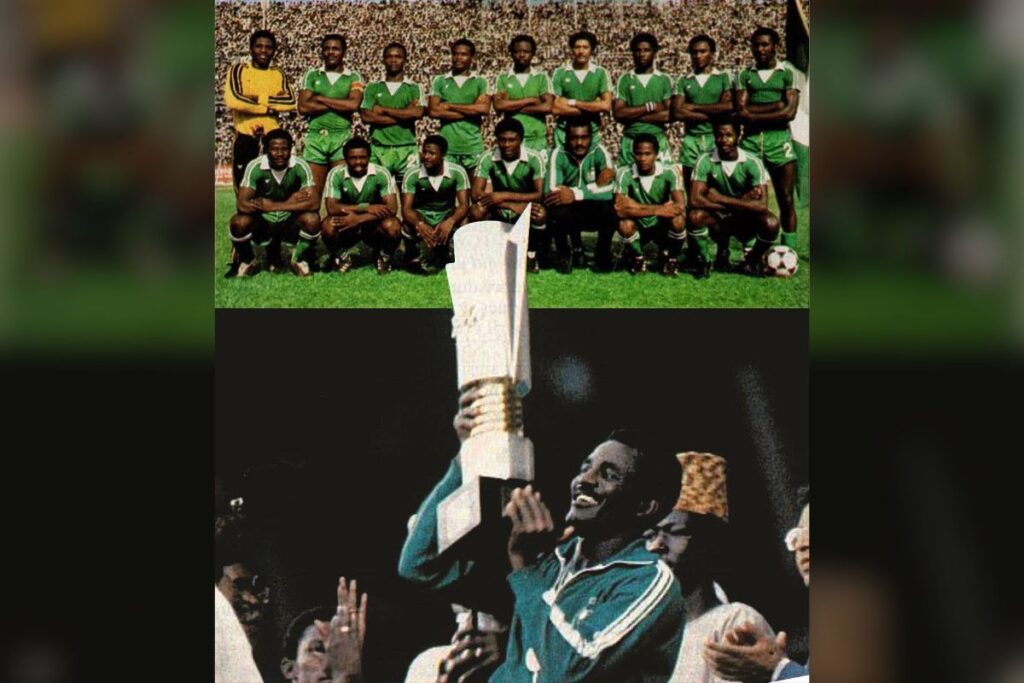
This team heralded Nigeria into football excellence at the continental level. Following Nigeria’s brief return to democratic government, the new government initiated a reform of the national team, making Nigeria eligible for participation in international competitions. The Green Eagles gave Nigeria its first taste of football dominance, recording consecutive podium finishes at the AFCON editions in 1976, 1978, and 1980.
It, however, took a while for Nigeria to win the tournament. They finished third in 1976 and 1978 before hosting the tournament in 1980 and landing their first continental title. During the competition, the team stamped their authority all over the pitch against every opponent, regardless of their quality or reputation. A cold run that included victories over 1974 AFCON bronze medalists Egypt and 1976 winners, Morocco.
The Green Eagles thumped the Pharaohs 1 – 0 in the group stage via a lone goal from Okey Isima. They recorded another 1-nil win over Morocco in the semis, the goal this time coming from Felix Owolabi. Algeria was Nigeria’s opponent for the final, where Segun Odegbami’s brace and Muda Lawal’s 50th-minute goal brought home the country’s first evidence of continental success at the Surulere (now Lagos National) stadium in Lagos.
Many African teams had not started recording major transfer movements outside of the continent at the time, and it followed that everyone on the Green Eagles squad enjoyed their entire careers on home soil, playing for various NPFL clubs.
A team’s pedigree is built on the players who take the scruff of the game by the neck. These names remain long after the match has ended, with exploits etched in the sands of time. Here are some of the pillars of that era.
Key players
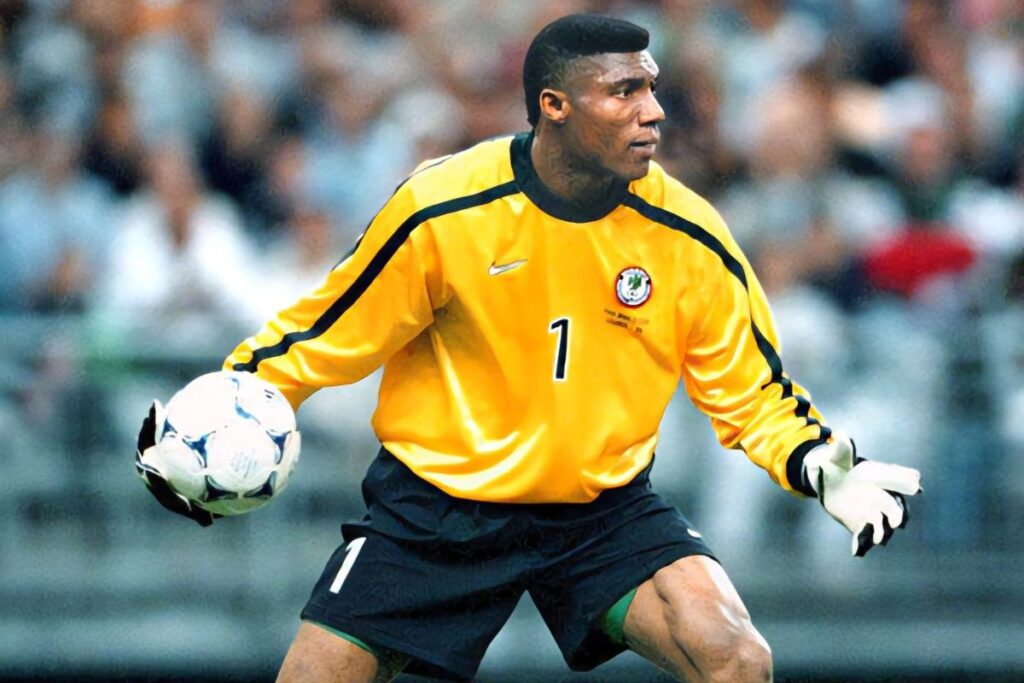
Segun Odegbami
Mathematical, as he was nicknamed, was the most influential player of the squad, eventually becoming Nigeria’s leading goalscorer for a short while, before Rasheed Yekini overtook him. Odegbami scored 22 goals for the national team while contributing to Shooting Stars’ local and continental success at the time.
His most defining moments came in the 1978 and 1980 AFCON games, where he scored decisively to help Nigeria to the podium finishes. Odegbami is most famously remembered for his brace in the 1980 AFCON final against Algeria, two goals that ensured that the Green Eagles were out of sight before halftime.
Christian Chukwu
Captain and right-back Christian Chukwu was instrumental to the success of the Nigerian Green Eagles in the 1970s and 80s. He led the team to three consecutive AFCON tournaments till they grabbed the elusive trophy. He also made the team of the tournament in their AFCON-winning year, emphasizing his relevance to the team at the time.
Mudashiru Lawal
Muda Lawal, as he was more popularly called, was one of the few players to make all the AFCON teams from 1976 to 1984, for the Green Eagles. He played a key role on the team from 1980, scoring in the 1984 AFCON final in a 3 – 1 loss to Cameroon.
He bowed out of the international scene in 1985, racking up two bronze, one silver, and one gold AFCON medals; a glittering trophy cabinet at the time, and one to be proud of.
Some other key players in this era include iconic goalkeeper Peter Rufai, Best Ogedegbe, Martins Eyo, and Baba Otu Mohammed.
Achievements
The pioneers set the pace and expectations for the Nigerian national team, making the podium four times in five AFCON editions between 1976 and 1984. Nigeria has since become a powerhouse in football, and one could draw a straight line from the Green Eagles squads in the 1970s to the embodiment of such a reputation.
The team achieved:
- 1976 Africa Cup of Nations (third place)
- 1978 Africa Cup of Nations (third place)
- 1980 Africa Cup of Nations (winners)
- 1984 Africa Cup of Nations (runners-up)
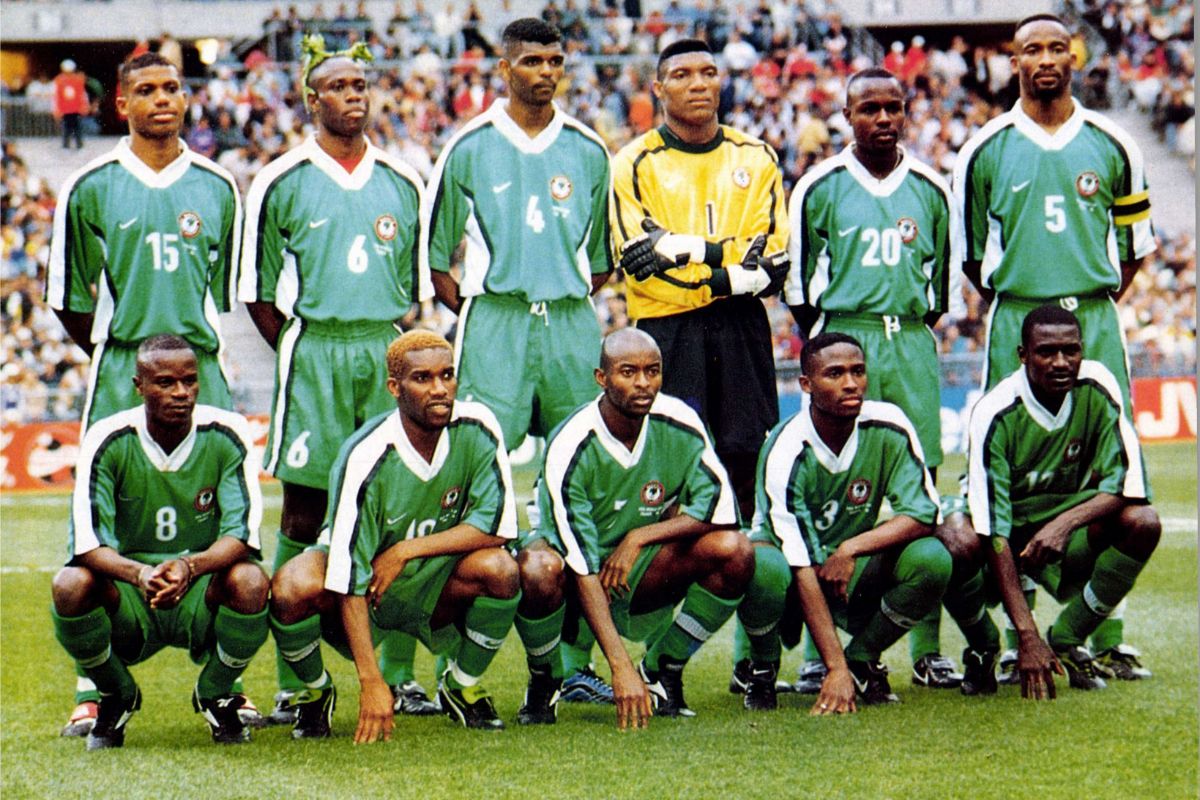
A Golden Generation (1990 to 2000)
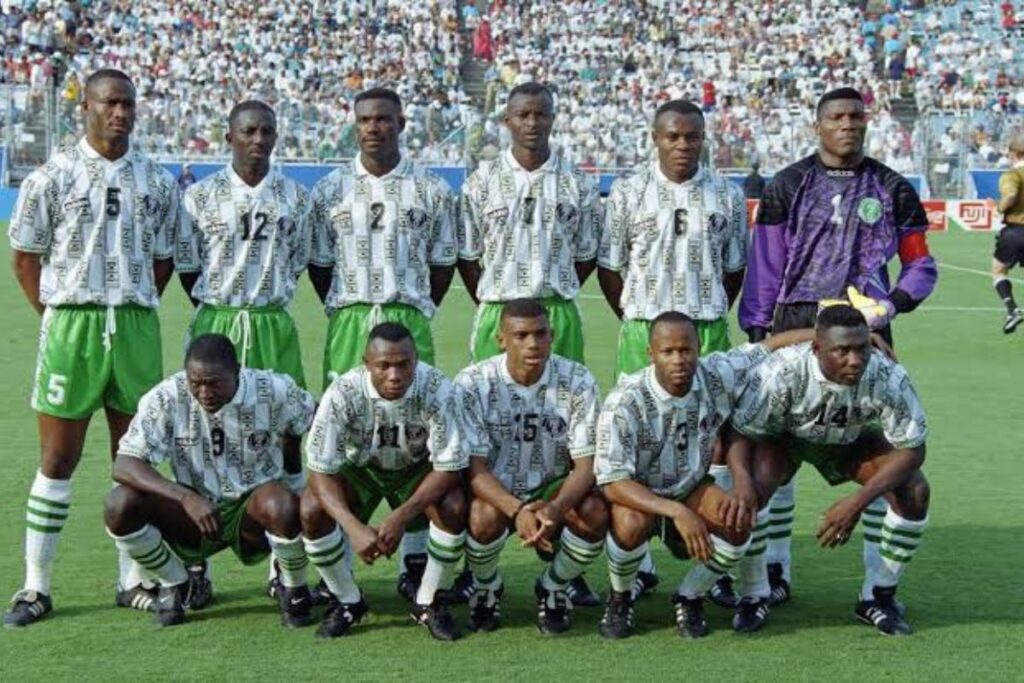
Generally, the 1990s marked a global crescendo for African football. A new crop of African superstars stormed Europe’s top leagues, stunning audiences and fans and yielding the first African Ballon d’Or winner, George Weah.
The result of these quality exports was an increase in the quality of the National teams, bolstered by an influx of returning and experienced players. Perhaps more than anyone else, the Super Eagles embodied this with a formidable squad in every sense of the word. More than just a group that exhibited individual and team brilliance, they had key players from some of the best teams in Europe.
Together, they launched Nigeria into a dominant era in global football, winning the 1994 AFCON before mounting quite the run in the FIFA World Cup later in the year. Before then, the Super Eagles had a third-place (1992) and two runners-up finishes (1988 and 1990) in the Africa Cup of Nations; the coveted trophy proving elusive time and again.
Disciplinary sanctions against Nigeria’s military regime restricted the champions from defending their AFCON title in South Africa 1996 and participating in Burkina Faso 1998. Irrespective, they kept a consistent top 10 spot in the FIFA rankings for most of the decade.
Here’s why:
1994 AFCON Capture
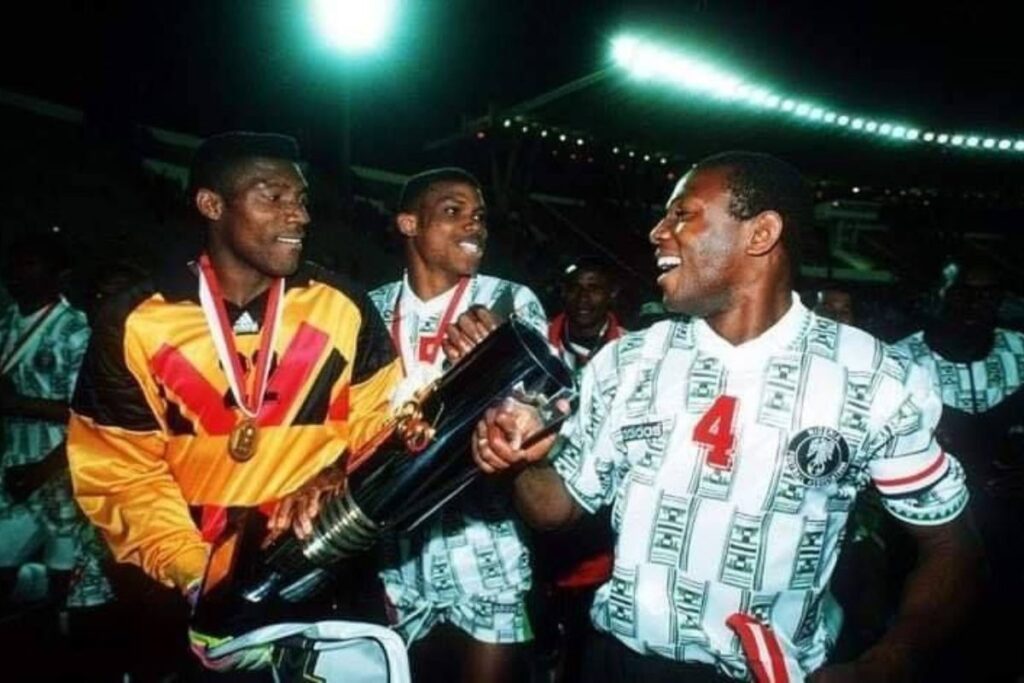
In 1994, the Super Eagles kicked off their tournament with a 3 – 0 win over Gabon in a group of three, with Rasheed Yekini netting on either side of Mutiu Adepoju’s 72nd-minute strike. They then held on to a goalless draw against the Pharaohs of Egypt to make second place in their group and proceed to the knockout stages.
In the quarter-finals, Zaire (now DR Congo) struggled to pose a threat to the Super Eagles, and they blew past the Leopards quite easily, thanks to another Yekini brace. The semi-finals saw a much sterner contest in the form of defending champions, the Ivory Coast.
And what a test it was. The game ended 2 – 2 after 120 minutes, but all four goals came in the first half, with Iroha and Yekini scoring equalizers to Michel Bassole’s double. In the penalty shootout that followed, Bassole missed his kick, Yekini and Iroha scored theirs. Samson Siasia alone missed his kick for the Super Eagles, as they advanced to the finals 4 – 2 on penalties.
Zambia, at the time, was a formidable opposition chasing their first AFCON trophy. Nonetheless, facing the Super Eagles in the final was equally a daunting task for the Chipolopolo. Elijah Litana opened the scoring in the El Menzah stadium in Tunis, but Emmanuel Amuneke netted twice in the game to deliver the country’s second AFCON trophy in style.
First FIFA World Cup
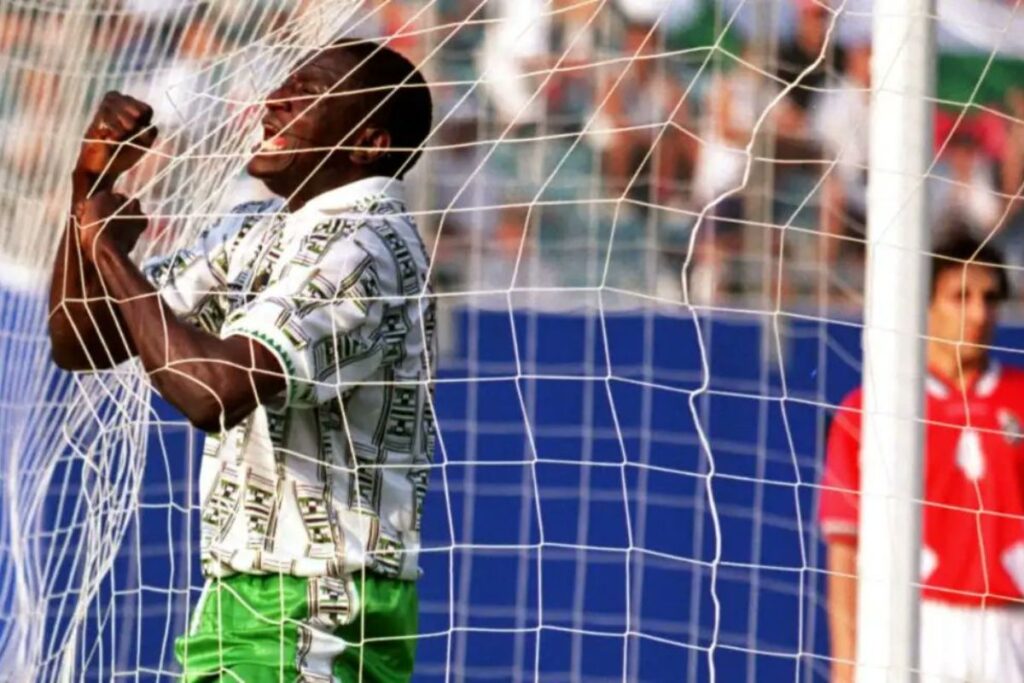
Their excellent run of form from the 1994 AFCON continued into the World Cup, where the Super Eagles quickly transitioned from overlooked to underdogs. Yekini, Amokachi, and Amunike marked the scoresheet on their first-ever World Cup game against eventual semi-finalists Bulgaria in an entertaining 3 – 0 win.
The team lost their next match 2 – 1 to Argentina, the first of many losses to the South Americans, with Samson Siasia finding the back of the net. Ultimately, a 2 – 0 win over Greece in their final group fixture ensured that the Super Eagles topped the group and progressed to the knockout stages with a growing reputation.
Nigeria was pitted against European powerhouse Italy in the round of 16, and, once again, the West African giants rose to the occasion. They matched Italy in all departments, playing their hearts out at Foxboro Stadium. Emmanuel Amunike broke the deadlock against the Italians in the 25th minute.
However, holding on to the lone goal proved difficult, and the Italians scored at the death through Roberto Baggio. The striker was also on target in the 103rd minute, burying a penalty and effectively denting the hopes of all Nigerians; players, and fans alike.
Compensation at the 1996 Olympics
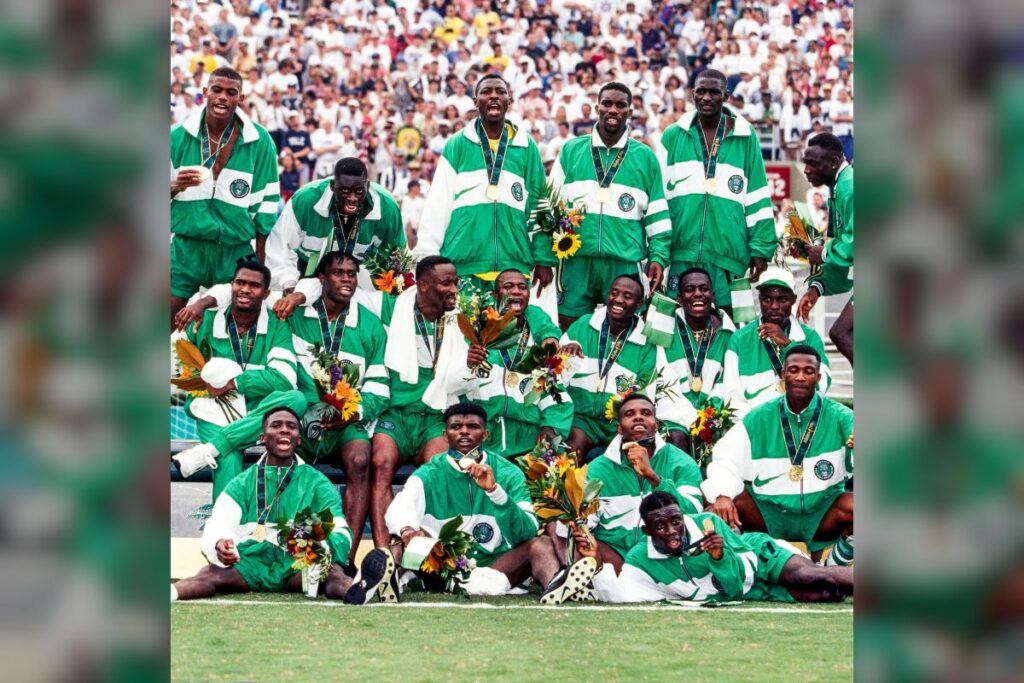
Despite missing out on the 1996 and 1998 AFCON editions, the Super Eagles had established an international reputation at the 1994 World Cup, even if the late exit still stung.
Nigeria’s delegation at the 1996 Olympics consisted of a perfect blend of young starters like Jay Jay Okocha and Kanu Nwankwo, and experienced players like Daniel Amokachi and Emmanuel Amuneke. Nigeria finished the group stages in second place despite losing to Brazil, after impressing against Hungary and Japan.
In the quarter-finals, Okocha and Celestine Babayaro scored a goal each against Mexico, as Nigeria moved with intent to the semis. Next, it was familiar opposition, as Nigeria faced Brazil again with a chance to avenge their group stage loss. And avenge they did, eventually running out 3 – 2 winners in the high-stakes fixture.
Nigeria faced off against Argentina in the finals, with the South American giants fielding a star-studded team that included Serie A legends Hernan Crespo, Javier Zanetti, and current Atletico Madrid coach, Diego Simeone. By the third minute, Nigeria found themselves trailing early thanks to a 3rd minute Claudio Lopez goal.
Babayaro scored the first equalizer before Argentina took the lead again through Crespo’s penalty. Amokachi scored the second equaliser, but it was AFCON hero Amuneke who secured Olympic Gold for the West Africans, scoring in the 90th minute and sending fans, home and abroad, into raptures. For the second time in two years, Nigeria was the pride of the continent, and this time, on the biggest stage.
Key Players
Sunday Oliseh
The main midfield anchor of the 1994 Super Eagles team, Sunday Oliseh, was a key player in the squad; an undisputed member of the starting line-up and a force to be reckoned with both in attack and in defence.
For many, that one Sunday Oliseh moment will always be his 25-yard screamer against Spain in the 1998 World Cup. Like other stars in that squad, Oliseh played for the European elite. Early stints at RFC Liege (Belgium) and Reggiana (Italy) from 1991 to 1995 gave him the right credentials to feature at Ajax, Juventus, Borussia Dortmund, VFL Bochum, and Genk from 1995 to 2006.
Emmanuel Amuneke
Amuneke remains the only Super Eagles player to wear Blaugrana colours, featuring for Barcelona between 1996 and 2000. For the Super Eagles, he will be remembered for his clutch goals across tournaments. His two goals in the 1994 AFCON final won Nigeria their second continental title, and his 90th-minute winner against Argentina in the 1996 Olympics forever cemented his name in the annals of Nigerian football.
Jay-Jay Okocha
The brilliant midfield maestro was an enigma in the golden generation of the Super Eagles. He broke into the squad at age 20, already playing for Eintracht Frankfurt, with a growing reputation in Europe to boot.
By the 1996 Olympics, Okocha was at Fernebahce, earning the best scoring return in his club career. Reflecting similarly for the national team, he scored a winner against Japan in the group stage and opened the scoring against Mexico in the quarter-finals. His career only became more iconic for club and country. A legend true and true.
His career took him through a number of teams – Borussia Neunkirchen and Eintracht Frankfurt in Germany, Bolton Wanderers and Hull City in England, and top teams like Fenerbahce and Paris Saint-Germain.
Daniel Amokachi
Amokachi was one half of a formidable two-striker partnership that was the national team’s go-to strike force for the entire decade (1990 – 2000). He featured at the 1990 AFCON at age 20, going on to be undroppable for the near future.
His most significant contribution came in the 1996 Olympics, as he scored in the final match against Argentina, helping the Super Eagles to victory. Amokachi also played for some of Europe’s elite, first at Club Brugge, then for Everton and Besiktas. Recurrent knee injuries forced him out of top-flight football in 1999, as he failed medicals at 1860 Munich, Tranmere Rovers, US Creteil, and Colorado Rapids before retiring in 2002.
Rasheed Yekini
Nigeria’s highest goal scorer, Raheed Yekini, was the point man for the Super Eagles from 1985 to 1998, helping them to podium finishes in 1990 and 1992, before scoring five goals in the 1994 AFCON to bring the trophy home.
He is also the first-ever World Cup scorer for Nigeria, creating his unforgettable net shaking celebration after scoring the first goal against Bulgaria in a 3 – 0 win. He had a fulfilling career across Europe after his move from Ivorian Africa Sports in 1987. Yekini ended his career back at home, returning to Africa Sports and, eventually, the NPFL before retiring in 2005.
Achievements
The 1990s squad was undoubtedly one that produced core memories for many Super Eagles fans, ending a 14-year wait for the AFCON. They also represented the country spectacularly at the 1994 and 1998 World Cups, and won the 1996 Olympics. The team was a joy to watch as much as they were a group to be proud of.
Together, they achieved:
- 1994 Africa Cup of Nations (winners)
- 1996 Football Olympics, Atlanta (gold medal)
- 1994 FIFA World Cup (round of 16)
- 1998 FIFA World Cup (round of 16)
- 2000 Africa Cup of Nations (runners-up)
Honourable mentions of other key players in the squad include Nwankwo Kanu, Victor Ikpeba, Samson Siasia, Peter Rufai, Stephen Keshi, and Uche Okechukwu. They were not the first trophy-winning Super Eagles squad, but they were vibrant, successful, and, like the pioneers of the 70s, they had the people’s hearts.
The “Keshi” team (2012 to 2014)
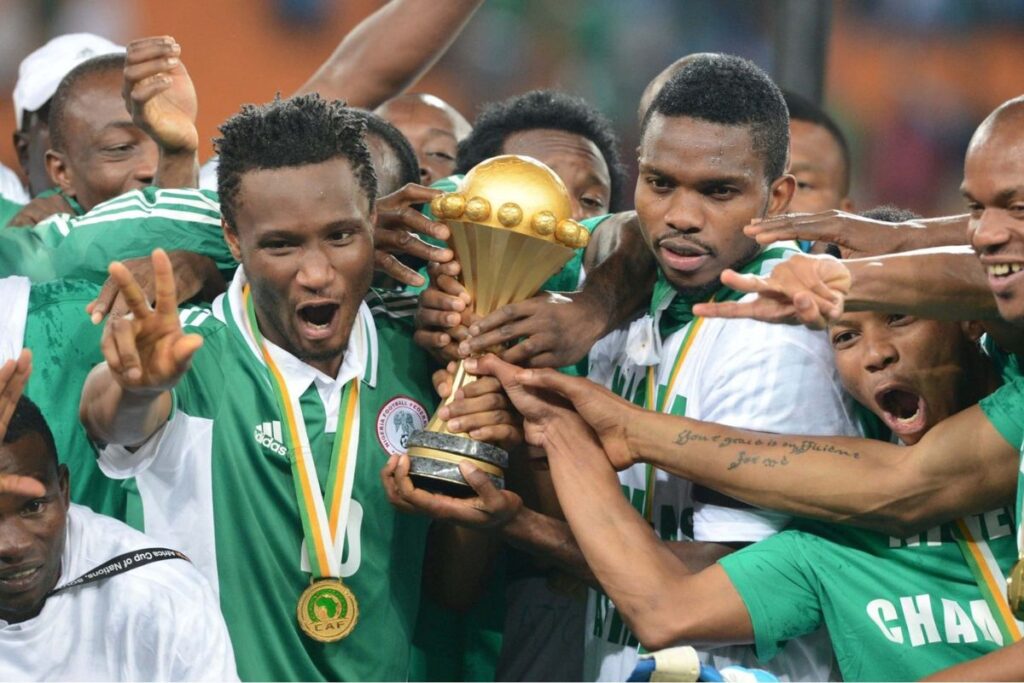
Stephen Keshi was a member of the early 1990s squad that dominated the AFCON tournament, eventually lifting it as a senior member of the team in 1994. He retired from international football soon after, but returned in 2011 as Super Eagles’ head coach, after previously coaching the Togolese and Malian national teams. Stephen Keshi became only the second person to ever win the AFCON as both a coach and a player after Egypt’s Mahmoud El-Gohary.
2012 was a rough year for Nigeria as they failed to qualify for the Nations Cup. Stephen Keshi got to work and assembled a cohesive Super Eagles set-up for the 2013 AFCON tournament, eventually bringing the trophy home for the third time. The squad featured several stars in Europe as well as promising home-based players, providing a much-needed team balance.
The 2013 AFCON group stage phase was a rough ride. Consecutive draws against defending champions Zambia and eventual finalists Burkina Faso threatened the Super Eagles’ campaign. At the end, a 2 – 0 win over Ethiopia, courtesy of a brace of penalties from Victor Moses, ensured that Nigeria finished second in the group.
From then on, the competition got a lot more straightforward. The team secured a brilliant win over fellow West Africans, the Ivory Coast, with Emmanuel Emenike and home-based forward Sunday Mba finding the net. Next was the 4 – 1 rout of Mali, where Nigeria scored all four goals before the hour mark in a vastly superior display.
The 2013 AFCON final couldn’t have ended better. Enugu Rangers star Mba produced magic to seal the third AFCON trophy for the giants of Africa, rifling in a volleyed shot after pouncing on a loose ball and calmly controlling it.
Keshi’s Super Eagles’ success did not end at the AFCON, however. Keshi coached his team through the World Cup qualifiers to earn participation in the 2014 FIFA World Cup. There, he repeated the success of the storied 1994 squad, reaching the round of 16 stage before the Super Eagles lost 2 – 0 to a superior French side.
Key Players
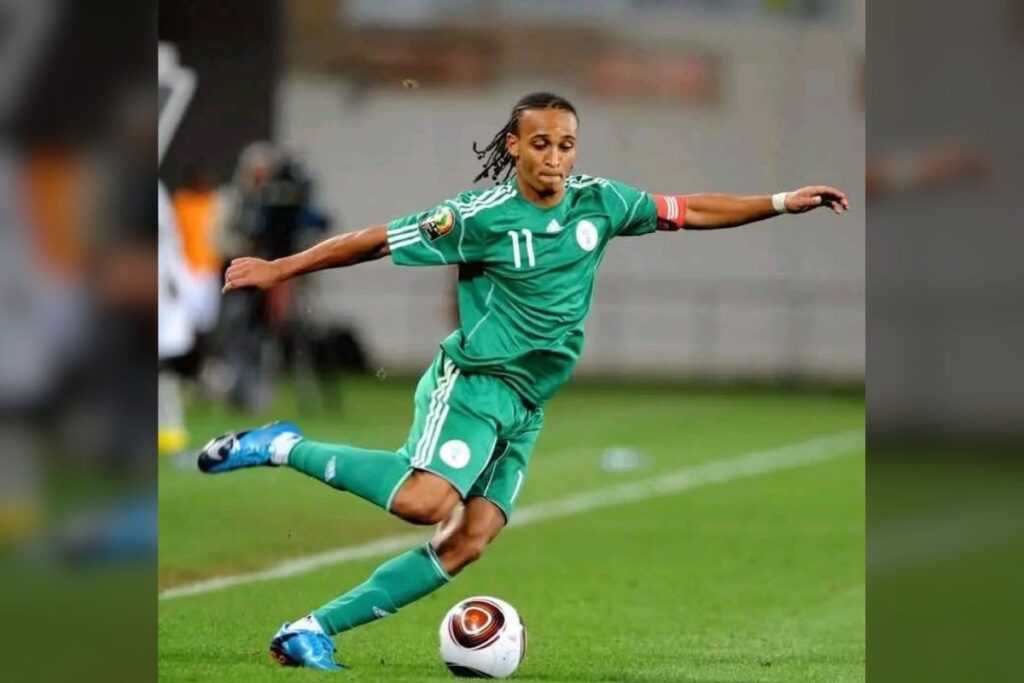
Osaze Odewingie in action for the Nigerian national team.
John Obi Mikel
Mikel Obi was an invaluable member of the Super Eagles team in 2013 and 2014, taking on the playmaker role and providing stability in attack. The sheer nature of the team’s chances and the number of goals in that time were a testament to his brilliance in coordinating Nigeria’s midfield.
Vincent Enyeama
Enyeama was the goalkeeper and a key member of the Super Eagles squad throughout his international career. He was extremely influential in Nigeria’s 2013 AFCON trophy win and their great run in the 2014 World Cup.
Along with keeping clean sheets and making stellar saves, he cut a leadership figure in the dressing room. Enyeama was especially renowned for his heroics in penalty shoot-outs, both as a kicker and a stopper. At the 2010 AFCON quarter-finals against Zambia, Enyeama saved the final kick and scored the winning penalty for Nigeria, one of his many exploits in his illustrious career.
Ahmed Musa
Musa is the most capped player to have featured for the Super Eagles, scoring 16 in 110 appearances. And while he did not get on the scoresheet in the 2013 AFCON, Musa stepped up in the 2014 World Cup.
He netted two equalizers against Argentina to cancel out Lionel Messi’s two goals, before the Super Eagles conceded a third. This underlined his international career, as he added being a constant goal threat to his winger responsibilities.
Honourable mentions for the top players in this era include: Emmanuel Emenike, Osaze Odemwingie, Sunday Mbah, Victor Moses, and Elderson Echiejile.
Achievements
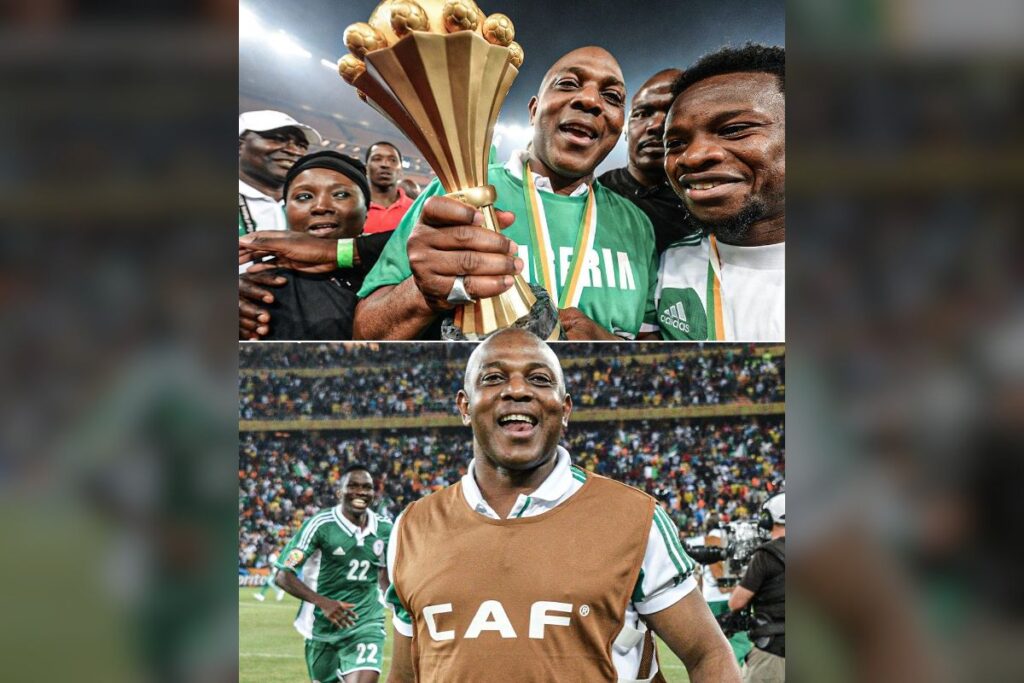
Stephen Keshi’s team is a quintessential reminder of the 1994 squad. Winning an AFCON after 19 years and reaching the round of 16 in the 2014 FIFA World Cup after 16 years. The time was short, the achievements good, but ultimately, the team made memories that will endure.
The NFF did not renew Keshi’s contract after the World Cup, citing commitment issues, setting off the coaching crisis that has held the team back for years. At any rate, Stephen Keshi’s legacy endures, becoming only the second person to lift the AFCON trophy as a player and as a coach, after Egypt’s Mahmoud El-Gohary (in 1959 and 1998).
Together, they achieved:
- 2014 FIFA World Cup (round of 16)
- 2013 Africa Cup of Nations (winners)
Who Takes The Crown
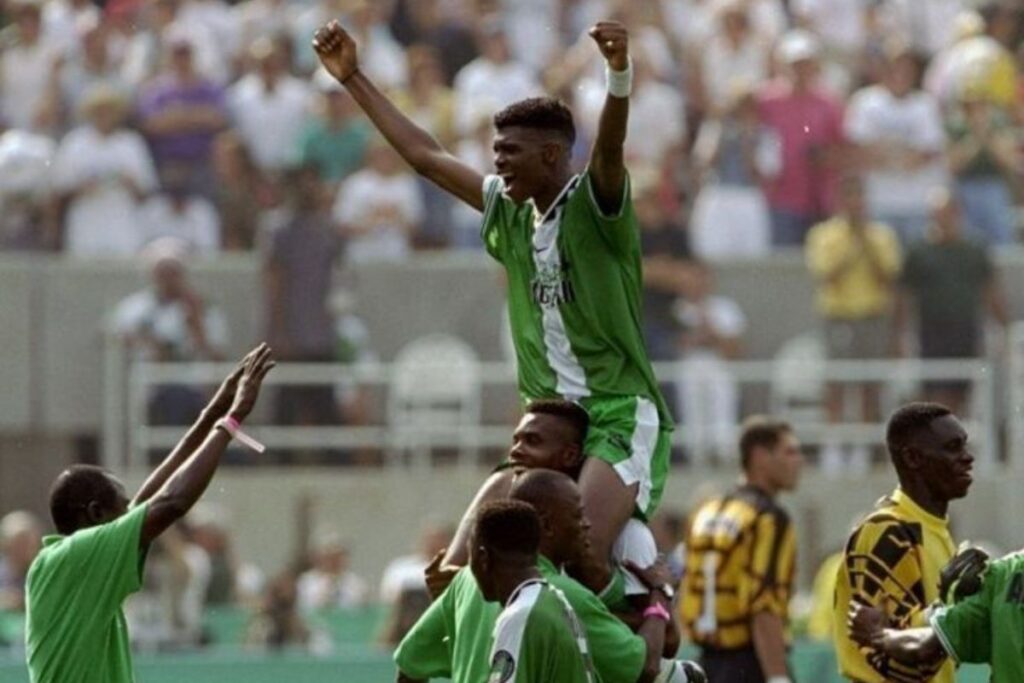
All three iconic Nigerian teams have justified claims to being the greatest Nigerian team of all time. All teams have won trophies and provided unforgettable moments for Nigerians globally, but there can be only one winner.
To choose the greatest team across the three generations, we will use the following criteria as yardsticks for our final pick.
Trophies & Titles
All three teams won the Afcon and fought for international glory to varying degrees of success. Nigeria won the first-ever Nations Cup title in 1980, driven by a squad that announced Nigeria on the continental stage, by defeating a formidable Algerian team 3 – 0 in Lagos. The iconic run includes seeing off tough North African juggernauts in Egypt and Morocco before the 3 – 0 thumping on home soil.
Stephen Keshi’s 2013-led team also won a hard-fought Afcon title with some of the best players Nigeria has ever produced. Driven by a united squad, the Super Eagles did the needful, running riot when possible and grinding out results by grit when demanded.
All things considered, the 1994 team slightly edges this round. The team was a formidable side in African football in its heyday, competing for major honours and representing Nigeria at its first-ever World Cup. Some key players also went on to feature for the 1996 Olympic team, winning gold in what is Nigeria’s highest international trophy to date.
Quality of Players
It takes considerable effort to win trophies, but nothing makes for a great side more than the quality of players available for the team’s matches. The 1980s squad has unforgettable players etched in the history of the Super Eagles. Odegbami was arguably Nigeria’s first goal machine, and the charismatic Captain Christian Chukwu would later manage the national team himself.
The 2013 squad is iconic for the quality of players it had. Vincent Enyeama is arguably the best African goalkeeper of all time. His Ligue 1 record for the most clean sheets in a season is still unbroken. Players like Ahmed Musa had a reputation as a winger, but perhaps the most popular among them was Chelsea’s midfield maestro Mikel Obi, who pulled the strings for the Super Eagles from the middle of the park.
However, the 1994 team stands heads and shoulders above the others with the sheer amount of quality and firepower available in the squad. Established players like midfield icon Sunday Oliseh are absolute legends of the game. The deadly duo of Nigerian strikers Rashidi Yekini and Daniel Amokachi was lethal for the Super Eagles, with forward Emmanuel Amuneke just as deadly. The younger players also left their mark in style. The legendary Jay Jay Okocha was the heartbeat of the team even as a youngster, while players like Kanu Nwankwo consistently delivered, going on to become an African legend.
Consistency & Dominance
Great teams are accompanied by a period of dominance, and the stronger the team, the longer the spell. The 1980’s team had a great run, but it was short-lived. After qualifying for the 1982 AFCON, the team was knocked out in the group stage. They made the final of the 1984 AFCON, losing 3 – 1 to Cameroon, and failed to qualify for the 1986 AFCON.
The 2013 team barely fared better in asserting their dominance on a continental level. They shockingly failed to qualify for the next Afcon in 2014, with internal issues and coaching inconsistencies the root cause. They, however, qualified for the World Cup, putting on a strong show to qualify from the group stage in second place, but ultimately losing 2- 0 to France in the Round of 16. The team failed to qualify for the 2017 AFCON tournament. They compensated by making the 2018 World Cup despite narrowly exiting at the group stage due to a slim 2- 1 loss to Argentina.
After the iconic Afcon triumph in 1994, the squad showcased its footballing prowess at home and abroad. They qualified for Nigeria’s first-ever World Cup appearance in 1994, defeating Bulgaria and Greece but losing to Argentina in the group stage and Italy in the round of 16. The core members of this squad also represented Nigeria at the 1996 Olympics, eventually becoming champions.
A Legacy For Ages
Judging by these three major criteria, Nigeria’s 1994 Afcon-winning side is almost mythical in the country’s footballing history. Replete with the stars and firepower to compete globally and the dominance and reputation to match. This team is the gold standard for footballing success, and future generations should aim to surpass them.
The Present Super Eagles
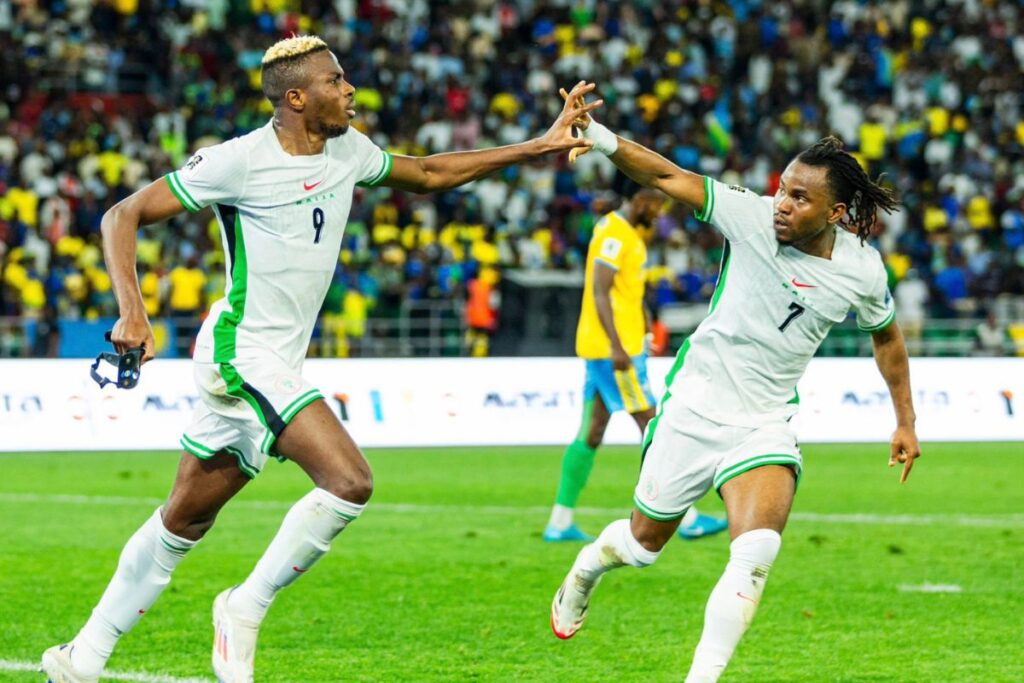
The current crop of national team players has more to achieve, as they have only managed bronze medals at the AFCON (2023 and 2025) and no appearances at the World Cup yet. What they lack in terms of achievements, however, they make up for in quality and depth. Current coach Eric Chelle also seems to be a great fit for the players.
Nowadays, many Nigerian players ply their trade abroad. The immediate result is the availability of Nigerian players from all corners of the globe, with a number playing at top levels across Europe.
Their recent performance at the 2025 AFCON indicates that it is only a matter of time before the present Super Eagles find their rhythm and challenge strongly for top honors.
There are no limits for Chelle’s men on paper, but as it stands, the Super Eagles of the 1990s still represent the best group of Nigerian stars to walk the continent, and they should be looking to surpass or at least emulate them.