





The Viareggio Cup is a prestigious youth competition where young players showcase their talents for the very first time. Arguably the most important youth tournament in the world, the Viareggio Cup, or Torneo di Viareggio, is open to football academies and youth teams all over the world, giving the young talent a chance to prove their mettle on an international stage, even if they couldn’t represent their countries’ youth categories.
One of the most beautiful aspects of modern sports these days is the opportunity for young talent to break into the limelight. By young talent, we mean teenagers, even below 18 years, becoming famous enough to have their own Wikipedia pages.
Indeed, these competitions where young stars are platformed don’t get to share the same screentime or popularity as the flagship competitions involving professional players. However, they are where the young players get cherry-picked for progress to the big stages.
Significantly, apart from friends and family, you can expect to find scouts and club sporting advisors in the stands, watching as the players display all the flair and fervour that they’ve got and earmarking potential talents for recruitment.
Torneo di Viareggio is held during the Carnevale di Viareggio, a festival that has been held in Viareggio, Italy since the 19th century. It runs for two weeks every year, typically between February and March, and many starlets from the competition go on to sign for Italian Serie A teams.
The 2026 Viareggio Cup is underway, although nearing its completion, and, in case you’re only just hearing about it, here is a compilation of what the tournament entails.
The Viareggio Cup: A Melting Pot of Football, History, and Culture
At its core, football is a source of entertainment, very much like movies, songs, and even visual art. And like most forms of entertainment, football in a region either originates from the culture (as you will find in Brazil) or it eventually infuses itself in the fabric of society (as is the case in many parts of Africa nowadays).
When we cast about for a key example of football meeting culture and history, the Viareggio Cup remains one of the oldest surviving scenarios. The football tournament is now a key part of the four-week carnival Carnevale di Viareggio that started in 1873, where peasants and local citizens protested against taxes imposed by merchants.
After the second World War, the local sporting community founded the Viareggio Young Players Centre in 1947 to rebuild a bright future for sports in the country after all the damages caused by the war. The Viareggio Cup is their effort at ensuring a sustainable football future in Italy and across Europe.
And, from all things considered, the tournament has fulfilled its purpose adequately. The inaugural edition was held in 1949, where there were 10 teams participating, with seven teams from Italy, two from France, and one from Switzerland.
The Viareggio Cup starts on the third Monday of the carnival, running till the end of the fourth week. Italian youth sides have dominated the competition too, with AC Milan and Juventus winning the competition the most times (nine times each).
The Viareggio Cup Stars and Cup Golden Boy Winners
As a precursor to professional football, the Viareggio Cup has seen its fair share of stars, including some of the big names that we recognize in world football today.
Franco Baresi, World Cup hero Paolo Rossi, Roberto Baggio, Francesco Totti, Gianluigi Buffon, and Andrea Pirlo are among the Italian stars who starred in the tournament in their youth. More recently, the Torneo di Viareggio Golden Boy award was created to reward the best talent in the tournament. Some of these players have gone on to star in the Italian Serie A, including Ciro Immobile (2010), Leonardo Spinazzola (2012), and Bryan Cristante (2013).
Players from other countries that had their first taste of glory in the Viareggio Cup include Argentina’s Gabriel Batistuta, Ireland’s Pat Bonner, and Croatia’s Robert Prosinecki.
Africa in the Viareggio Cup: Okwawu United and Beyond Limits F.A.
The 1990s represented a golden era for African football, as many more Africans starred in various European clubs. From Ballon d’Or winner George Weah to the breakout of players like Samuel Eto’o, Didier Drogba, and Nwankwo Kanu, Africans made a brilliant first impression on the international scene.
And the Viareggio Cup was no exception. Okwawu United of Ghana was the first African team to compete in the Viareggio Cup, as they first appeared in the tournament in 1999. They lost all their games in the group stage, with Lazio and Benfica proceeding to the round of 16.
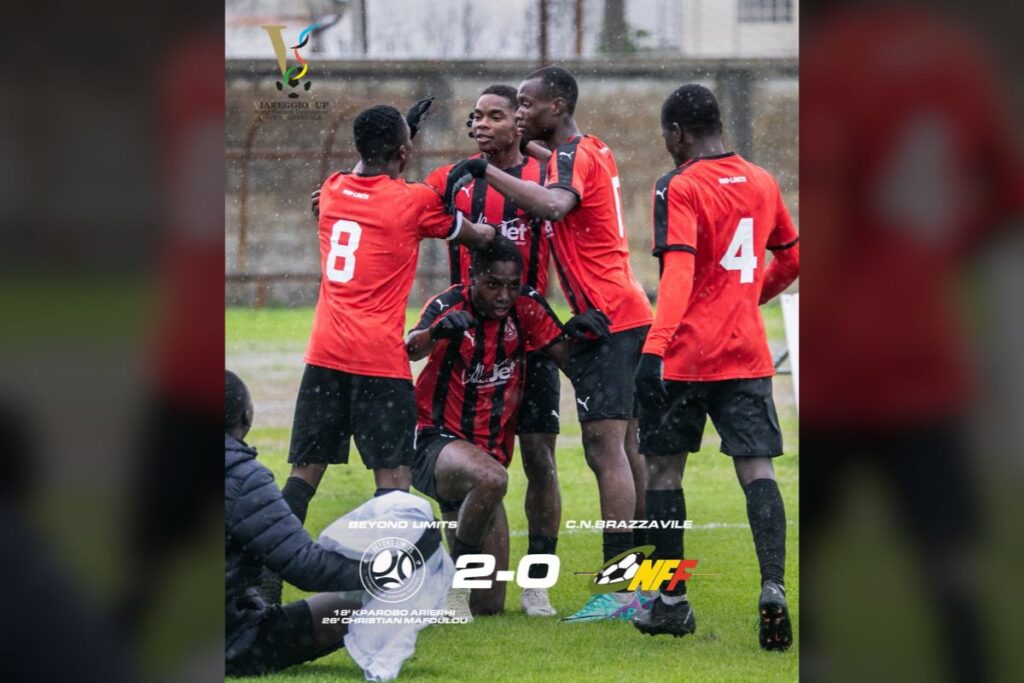
Since 1999, other African youth teams have appeared in the competition, often not more than two or three per edition. However, Nigeria’s Beyond Limits F.A., the youth team for NPFL team Remo Stars, made history as the first African team to win the Viareggio Cup. They defeated another African team, Centre National de Brazzaville, 2 – 0 in the competition’s first all-African final final to secure the trophy in 2024.
For context, Beyond Limits F.A. are only the second team outside of Europe to win the Viareggio Cup, following Uruguay’s Juventud in 2006, and the sixth non-Italian side to secure the trophy since it started.
Viareggio Cup 2026: Participants, Performances & Stars

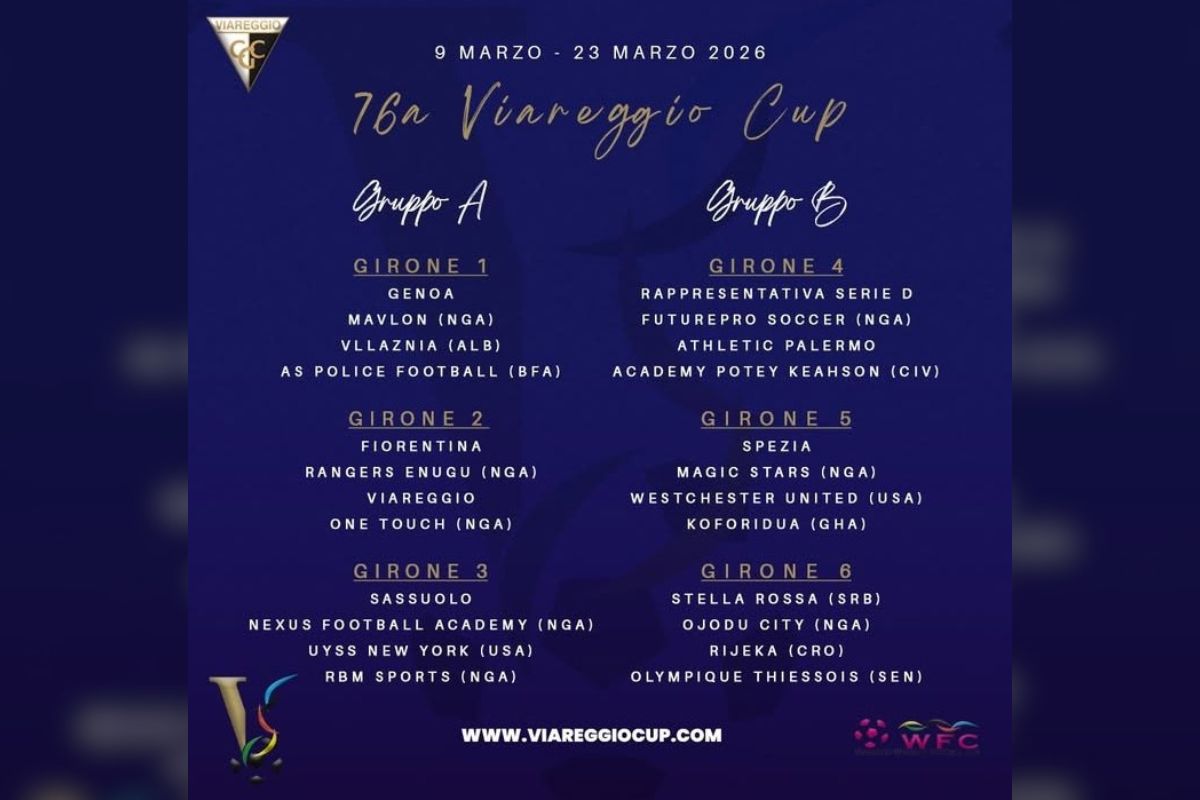
There were 23 participating teams in the Viareggio Cup, with seven of them representing African countries. It is the first time the competition will feature so many teams from Africa, and Nigeria sports the most teams.
Mavlon FC, One Touch Abuja, Magic Stars FC and Ojodu City all come from Nigeria, with AS Police (Burkina Faso), Olympique Thiessois (Senegal), and Academy Potey Keahson (Ivory Coast) completing the African delegation.
The full list of participating teams is as follows:
Italian:
Genoa U18
Fiorentina U18
Vis Pesaro 1898
Sassuolo
Lucchese Libertas 1905
SS Signa
Rappresentativa Serie D
SSD Athletic Club Palermo
Spezia U19
Pistoiese U18
Siena
Viareggio 2014 Juniores
African:
Mavlon FC
AS Police
One Touch Abuja
Academy Potey
Olympique Thiessois
Ojodu City
Albanian:
Vllaznia Shkoder
American (US):
UYSS Soccer Star New York
Westchester U19
Croatian:
HNK Rijeka U19
Serbian:
Red Star U18
Historically, the Italian youth sides have been dominant in the Viareggio Cup, winning most of the games and, eventually, the tournament. However, that trend has been fading gradually, with the Italians seeing significant competition from foreign youth teams and academy teams.
This year’s edition saw five of the African teams progress to the knockout stage, with only Ojodu failing to make it past the group stage. They were joined by HNK Rijeka U19 (Croatia) and the two sides from the US, with Italian youth teams making up the other eight teams in the Round of 16 stage. Eventually, One Touch Abuja was the only African team to reach the semis, where they lost to HNK Rijeka.
Forward Ndiaga Sall from Rappresentativa Serie D was the most valuable player in the tournament, and he justified his value by accumulating six goals throughout the competition. His team crashed out at the quarter-final stage, losing 1 – 2 to eventual finalists HNK Rijeka, but the 16-year-old Senegalese still sits atop the highest goalscorer list.
Nigeria’s One Touch Abuja made it the farthest for any African team in the Viareggio Cup 2026, with Fiorentina U18 progressing at their expense. Now, it will be the Italians to take on the Croatian side HNK Rijeka on March 23rd, 2026 to mark the end of the tournament and the carniva