





The UEFA Champions League is to Europe what the CAF Champions League is to Africa. The pinnacle of football on the continent, the CAF Champions League gathers the finest teams in Africa to compete for the ultimate title in African club football. A source of joy for millions of fans across Africa, the competition is not just a tournament but a celebration of prestige, identity, and a passionate pursuit of excellence.
This season, the tournament has been just as exciting and nerve-wracking as a competition of its stature should be. Complete with assertive dominance, upsets, and underdog dreams, the competition has been a delight for fans. Consequently, with semi-final games on the cards, the tension leading up to the finals has hit a feverish peak.
On one hand, 2016 winners Mamelodi Sundowns of South Africa will be looking to emerge victorious in their match-up against Tunisian powerhouse, Esperance De Tunis, in what is guaranteed to be a cracking tie. On the other hand, a Moroccan derby is brewing, as last year’s Confederations Cup winners RS Berkhane take on current Moroccan Botola Pro League leaders, AS FAR Rabat.
Everything You Need To Know About The 2025/26 CAF Champions League
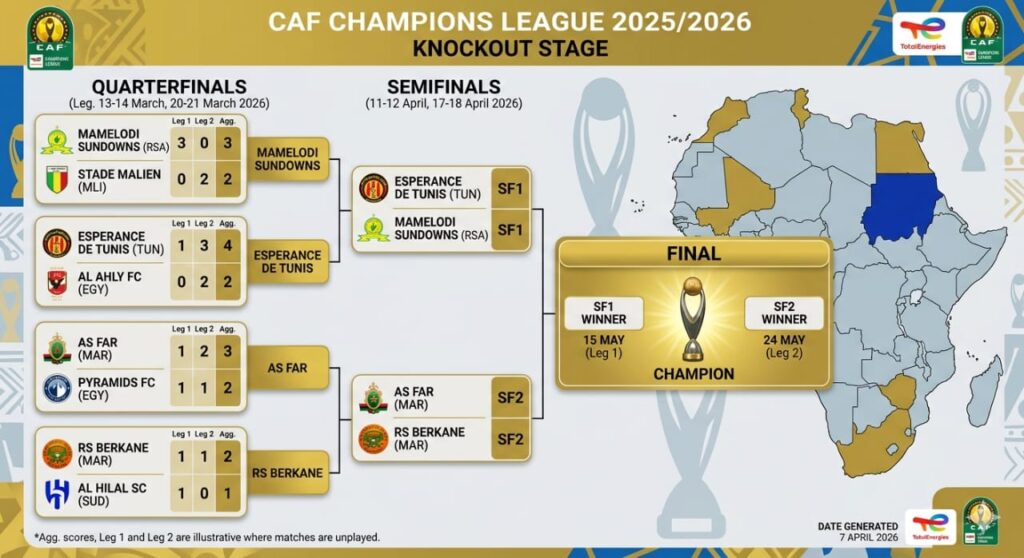
The current CAF Champions League season kicked off its preliminary qualification round on September 16, 2025, with 62 teams participating from 50 member associations.
Competition Format
Typically, the CAF Champions League accepts 2 teams from each of its top 12 member associations. These are the best-performing leagues on the continent according to CAF’s 5-year ranking, and the league winners and runner-ups secure qualification to the Champions League.
Only the league champions, separate from the other 38 associations (also ranked according to CAF’s 5-year ranking), contest in the Champions League.
There are two qualification rounds, which aim to reduce the teams to 16. These qualification rounds are two-legged, as is the rest of the competition. At the end, the 16 teams are divided into four pots and drawn into 4 groups.
The first two teams in each group then progress to the knockout stages.
Stade Malien And The Underdog Race
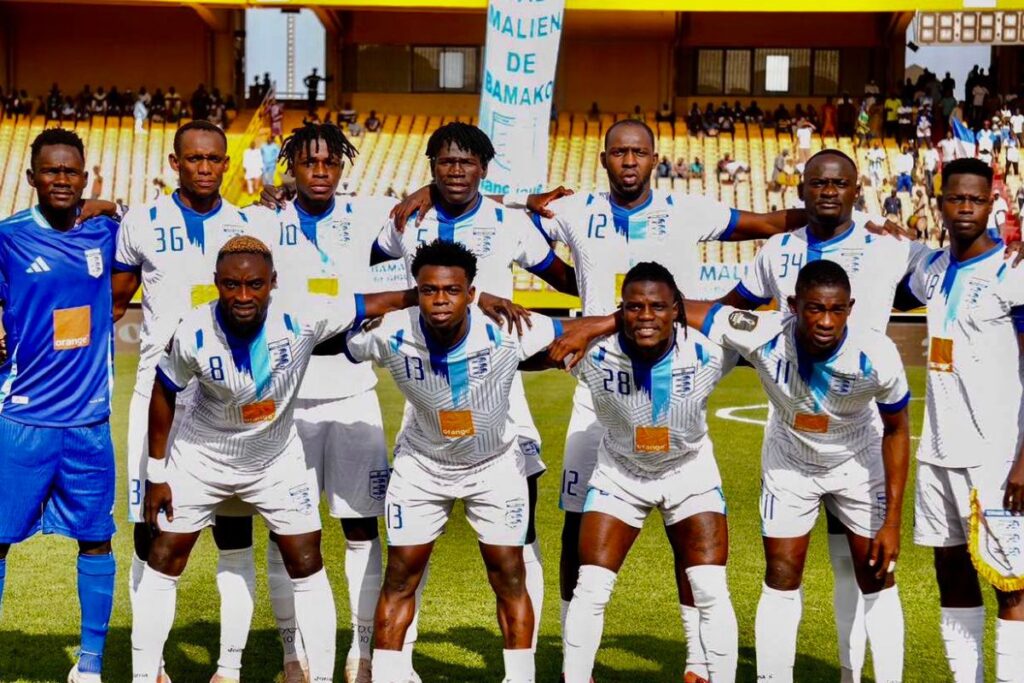
The trend through the 2025/2026 CAF Champions League season has been one that justifies CAF’s ranking of its member league associations. Much like in Europe, the trend is that the higher-ranked leagues tend to go farther in the competition, compared to other leagues.
CAF’s ranking has the following leagues in the top 12:
- Egypt
- Morocco
- South Africa
- Algeria
- Tanzania
- Tunisia
- Angola
- DR Congo
- Sudan
- Ivory Coast
- Libya
- Nigeria
This season has almost justified CAF’s ranking system. Only two of the 16 teams that emerged from the qualifiers came from the 38 lower-ranked leagues, namely, Stade Malien (Mali) and Power Dynamos (Zambia).
From their performance, the Malian side has proven to be underdogs of sorts this season. They strolled past opponents from the Central African Republic (AS Tempete) and Mauritania (FC Nouadhibou) in the qualification rounds, before going on to top Group D ahead of current semi-finalists Esperance Sportive de Tunis (Tunisia).
Stade Malien were eventually eliminated at the quarter-final stage by Mamelodi Sundowns, after a 2 – 0 win proved insufficient to overturn their initial 3 – 0 defeat in South Africa. the Malians will take some joy home with them, however, as midfielder Mamadou Traore sits in second on the assists rankings, with 3 assists, behind Sundowns’ Nuno Santos.
As for Power Dynamos, their campaign ended in the group stage, where they finished third in Group A behind last year’s CAF Champions League winners, Pyramids (Egypt), and CAF Confederations Cup winners RS Berkane (Morocco).
The Semi-Finalists
The Champions League is now down to its last four, and this year’s semi-finals are an interesting mix.
On one hand are major representatives of Tunisia and South Africa, as Esperance de Tunis battle against Mamelodi Sundowns. The South Africans knocked out the Tunisian side last season in the quarter-finals, and the Taraji will be looking to return the favour this time on their way to a third CAF Champions League title in 10 years.
On the other hand, a thrilling Moroccan derby is brewing, as AS FAR Rabat take on local rivals RS Berkhane in an interesting turn of events. Rabat sits atop the Moroccan Pro League, with Berkhane in sixth place. There are only four points between them on the domestic league standings, but they have a lot to fight for as they go neck and neck for a ticket to the final. Here is how each team has fared so far –
Mamelodi Sundowns (South Africa)
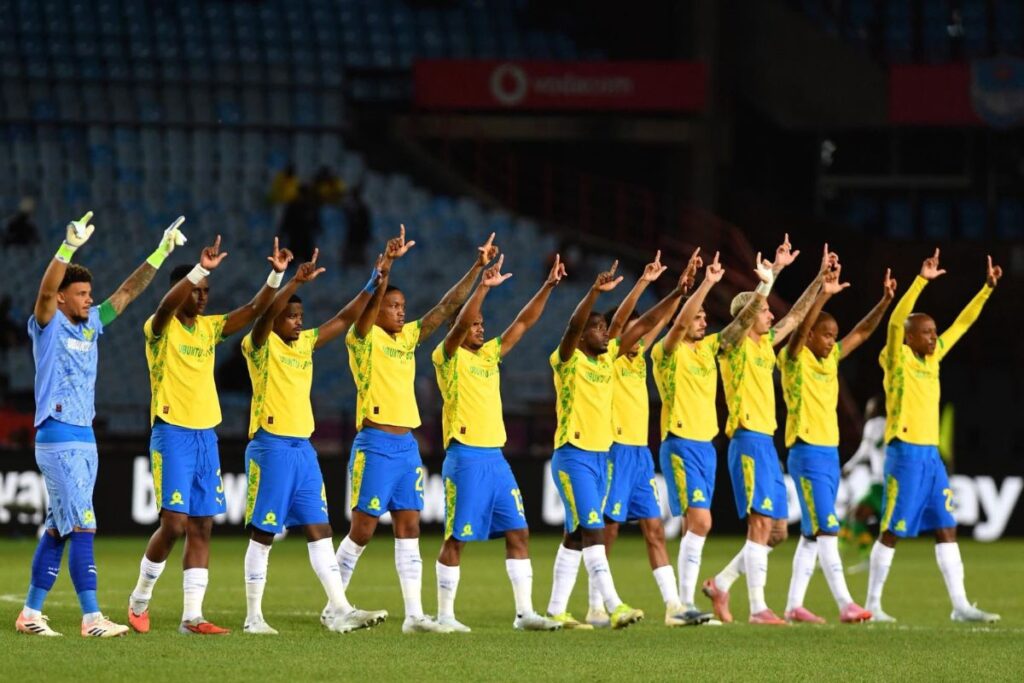
The South African champions loudly announced their presence in the competition at the second round of the qualification stage. Facing off against the Nigerian Professional Football League (NPFL) champions, Remo Stars, in what was expected to be a tough tie, Sundowns subjected them to a thorough drubbing. Recording an aggregate 7 – 1 scoreline that was easily the biggest win of the round. In hindsight, the win was shocking, as Remo Stars had just seen off US Zilimadjou (Comoros) with a 5 – 0 win in the previous round.
They finished second behind Al Hilal (Sudan) in a group that they were expected to top easily. At any rate, Mamelodi Sundowns moved on to the knockout phase to face underdogs Stade Malien in the quarter-finals.
Another eventful game, as the in-form Stade Malien team looked to add Sundowns to their list of vanquished giants. Mamelodi Sundowns got the job done in Pretoria in the first leg, earning a 3 – 0 lead in the tie that proved difficult to overturn for the Malians.The South Africans lost the away fixture 2 – 0, just enough to slip them into the semi-finals without any upsets.
Esperance Sportive de Tunis
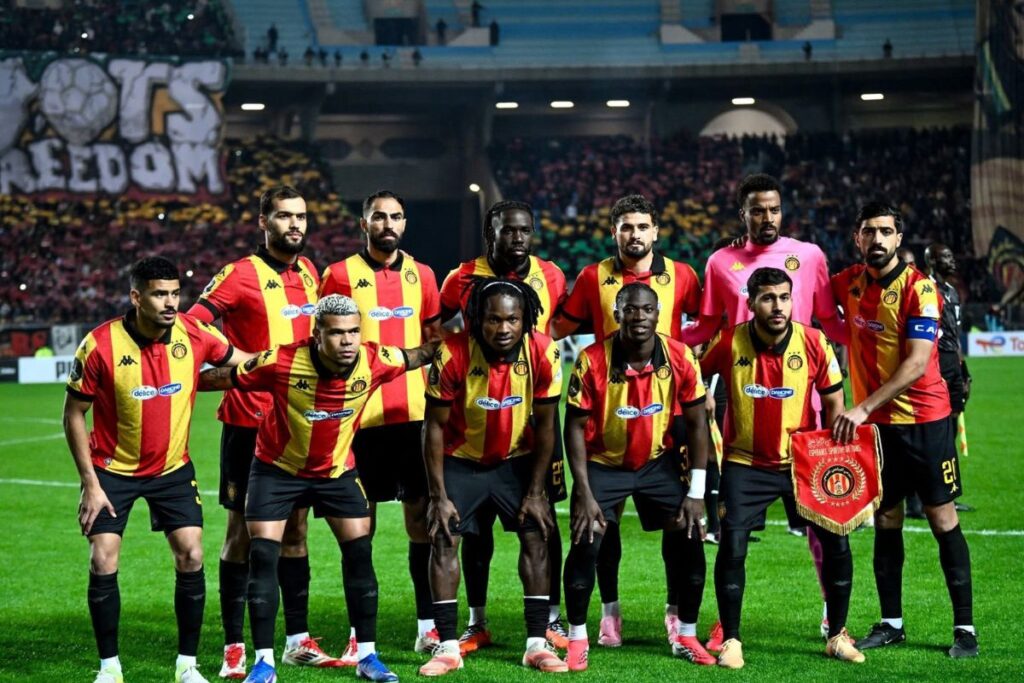
Esperance are one of the most prolific CAF Champions League teams in the competition’s history. Reaching nine finals since 1994, they have gone on to win four of these finals, with the latest coming in 2019, and they will be hunting for another at Sundowns’ expense.
Esperance began their CAF Champions League run this season with a 7 – 1 rout of AS FAN (Niger), before another comprehensive 4 – 0 victory over Rahimo (Burkina Faso).
They finished second in Group D after losing to group leaders Stade Malien, and went on to face Egyptian giants Al Ahly in a repeat of the 2024 CAF Champions League final. However, Esperance finished on top of the game this time, knocking the perennial champions out 4 – 2 on aggregate and drawing Mamelodi Sundowns in the semi-finals.
It will be another historic clash, as both sides met last season in the quarter-finals, with Sundowns qualifying via a lone goal scored in Pretoria.
AS FAR
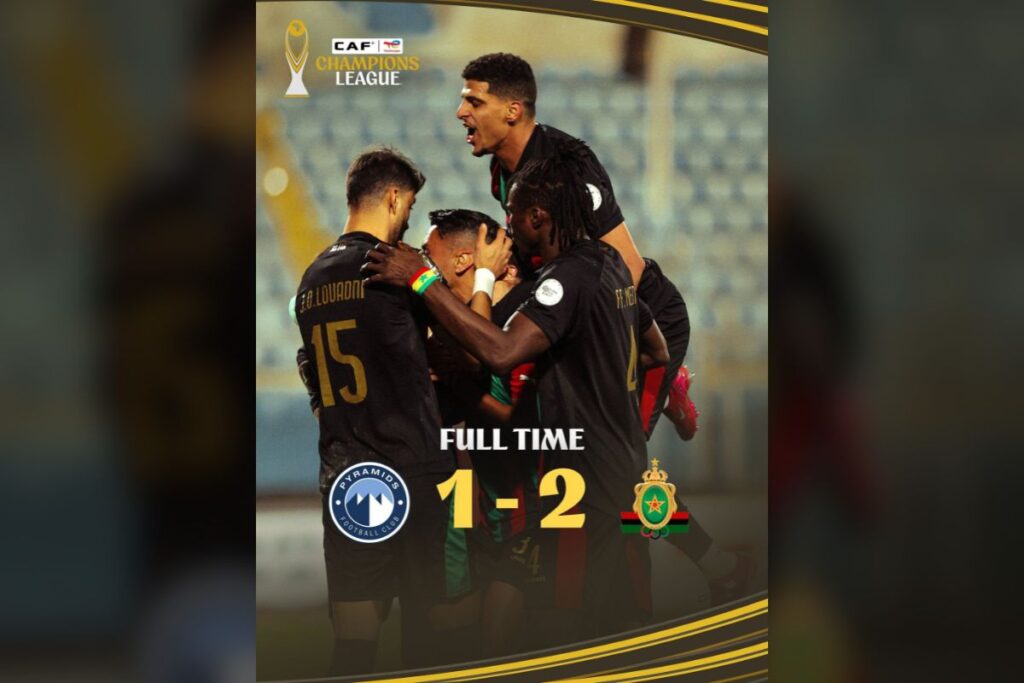
Rabat is one of the Moroccan teams in the semi-finals, and they had a similar run to Sundowns and Esperance. They kicked off with two 4 -1 victories in the qualification stages against Real de Banjul (Gambia) and Horoya (Guinea), ending the group stage in second place behind Al Ahly.
Along with their dominant spell in the Moroccan Botola Pro, AS FAR eliminated last year’s CAF Champions League winners, Pyramids, with a 2 – 1 win away. Now, they are on a collision course with fellow Moroccan club RS Berkhane, who were last year’s CAF Confederations Cup winners.
AS FAR Rabat have just found resurgence, as their form in the intercontinental competitions has only recently improved. They were last in the CAF Champions League in 2013, where they lost to AS Real Bamako (Mali). They also last featured in the knockout stages in 1988, where they lost 5 – 3 on penalties to Iwuanyanwu Nationale (Nigeria) in the semi-finals.
Rabat last won the CAF Champions League in 1985; could this be the year they return to champion status, or do they exit at the hands of familiar foes?
RS Berkhane

Last season’s CAF Confederation Cup winners and defending champions of the Moroccan Botola Pro League have had a decent run through the 2025/2026 CAF Champions League. While this season has not been as remarkable as the last, as they sit in 6th place in the Botola Pro, they are now in the semi-finals and competing for another piece of continental silverware.
Berkhane won 4 – 2 and 3 – 2 in the qualification rounds against ASC Kara and Al Ahli Tripoli (Libya), and finished second in Group A, behind Pyramids. The knockouts featured a relatively straightforward 2 – 1 win over Al Hilal (Sudan), and now they prepare to take on current league leaders Rabat, who are on a fine run of form across competitions.
The current standings indicate that there will be at least one Moroccan team at the CAF Champions League final this year. North African teams still dominate the semi-final slots, but for the first time in seven years, we don’t have an Egyptian semi-finalist.
Revenue, Sponsors And Prize Money
Football, as we know it, has transcended simple entertainment and is now a full-blown global business. From fan-dependent enterprises like betting and merchandise sales to ticket and player revenue, football clubs and competitions have now become a teeming hub for income generation.
As a result, the top global corporations have been purchasing major stakes in clubs from various leagues (as private equity) and sponsoring football competitions for commercial purposes.
The CAF events are no exceptions. The federation has been heavily backed by large corporations, and as the competition’s prestige and perception have grown in the past few years, so has its sponsorship.
CAF Official Global Sponsors
There are two sponsor categories for CAF events: the title sponsor, whose name reflects on all the event/competition titles, and the official global sponsors. The title sponsor at the moment is French oil company TotalEnergies, which signed a ten-year contract in 2016 and extended it till 2028 in 2025.
Official global CAF sponsors include Orange, the European Union, Suzuki, Visa, Royal Air Maroc, Tecno, 1xBet, TikTok, and QNET, with Puma signed as the ball supplier.
Prize Money For CAF Champions League Teams
While ticket sale revenues and media rights for African teams are not disclosed as clearly as their European counterparts, the prize money structure for CAF Champions League teams is public.
In fact, the federation made the news recently for a $2 million bump in prize money for winners of the Champions League and Confederations Cup, thanks to renewed contracts from its title sponsor, TotalEnergies. Here is how much teams will make for their participation in the competition:
- Winners: $6,000,000
- Runners-up: $2,000,000
- Semi-finalists: $1,200,000
- Quarter-finalists: $900,000
- 3rd in group stage: $700,000
- 4th in group stage: $700,000
Before 2024, teams that crashed out during the qualification stages didn’t get compensation. However, CAF has created a special travel grant to be awarded to such teams, following the recent cash injection from sponsors.
Now, teams that are eliminated at either of the qualification rounds get $100,000, a raise from the initial $50,000 awarded in the 2024/2025 season.
The North African Dominance Continues
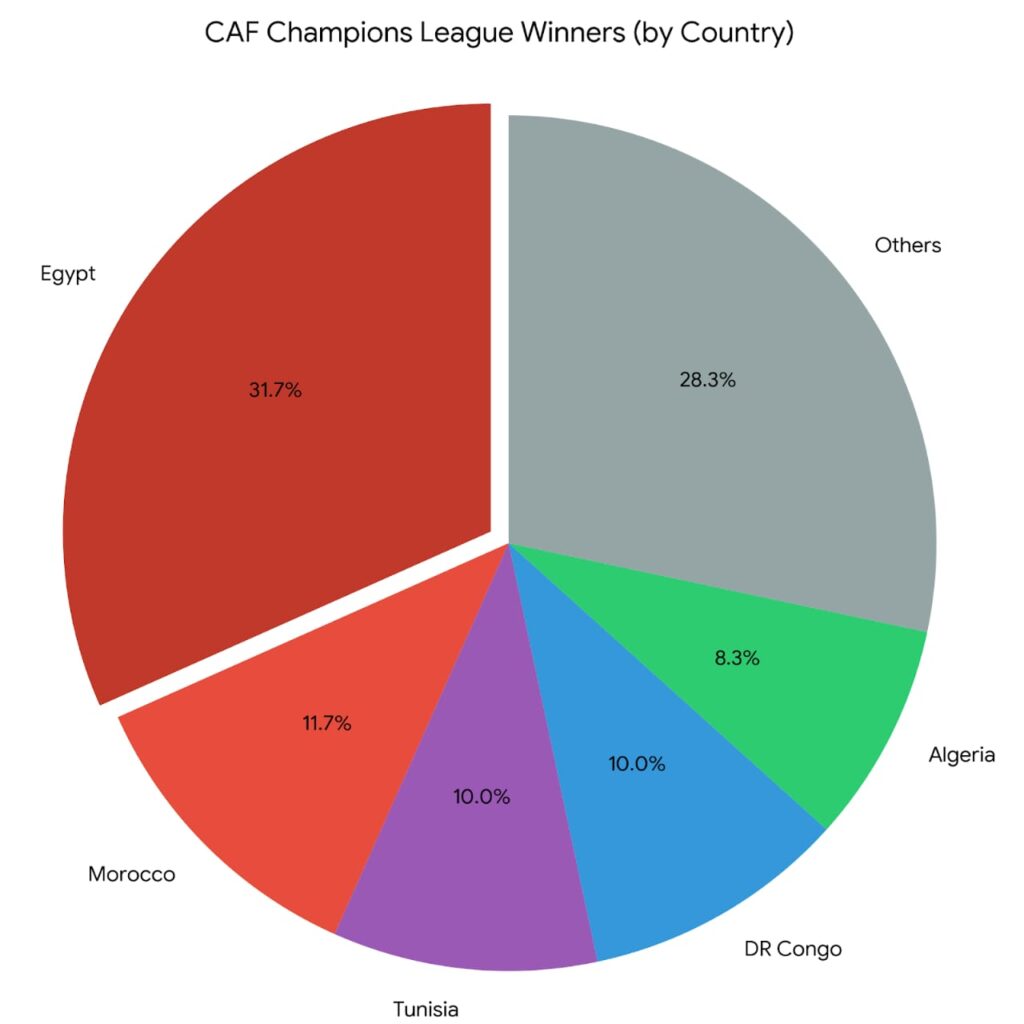
Cameroon’s Oryx Douala were the first club to claim the African Cup of Champions trophy (as it was called initially) in 1965. Since then, there has been a marked dominance of North African clubs in the competition. They weren’t as competitive in the ‘60s and ‘70s, but the trophy only moved out of Northern Africa once between 1984 and 1996, when it was eventually rebranded as the CAF Champions League.
Egyptian clubs have won the competition the most, a record 19 times, with Moroccan and Tunisian clubs winning it seven and six times respectively. The current holders are the Pyramids, from the Egyptian Premier League, after they defeated South Africa’s Mamelodi Sundowns 3 – 2 on aggregate on June 1, 2025.
Despite the North African dominance, there have been other notable wins in the competition’s history. Nigeria’s Enyimba pulled off back-to-back CAF trophies in 2003/04, with DR Congo’s TP Mazembe securing their third and fourth CAF wins similarly in 2010/11.
The Congolese side (2015), along with Mamelodi Sundowns (2016), are the only clubs outside of North Africa to win the CAF Champions League in its past 11 editions. Sundowns have been a constant presence in the semifinals in recent years, giving the North African hegemony a good run for their money. This year, the South Africans find themselves in another last-four situation with the North Africans.
Nigeria In The CAF Champions League
The Nigerian Professional Football League (NPFL) keeps ranking among the top 12 member associations in CAF every year, but that has not translated into continental success in a while. Enyimba’s back-to-back CAF Champions League titles in 2003 and 2004 are the stuff of legend, but the NPFL has failed to attain such levels in CAF competitions in modern times.
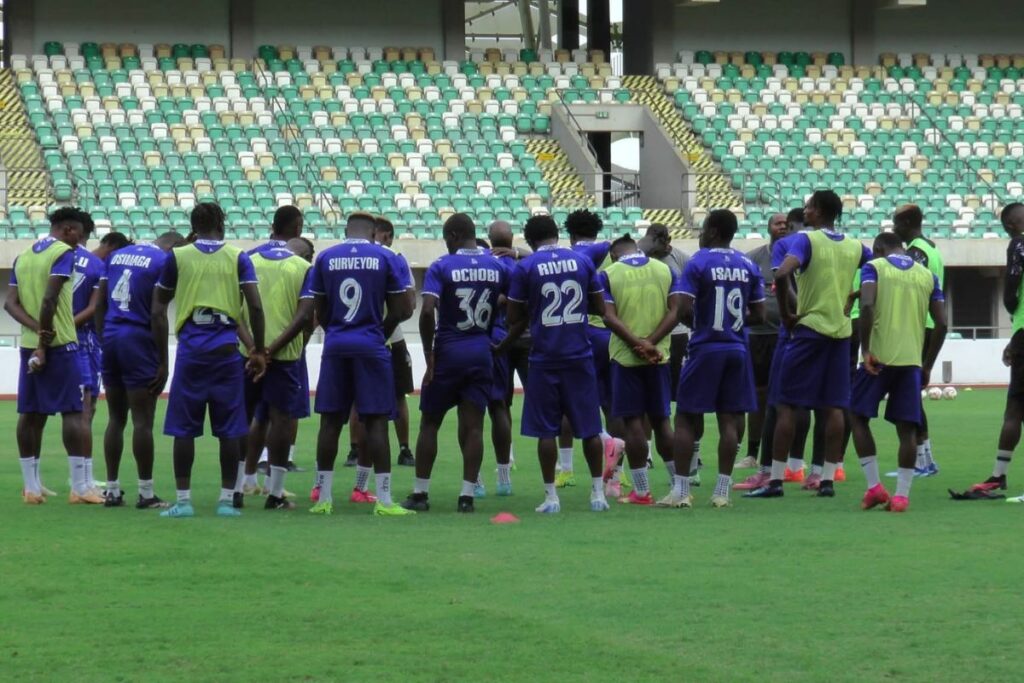
This season, Nigeria was represented by Remo Stars and Rivers United in the Champions League, as they finished first and second, respectively, for the 2024/2025 season. While Remo Stars made some progress up to the knockout rounds, Rivers United didn’t make it past the group stages.
Remo Stars, the defending NPFL champions, recorded a comprehensive 5 – 0 victory on aggregate over US Zilimadjou in the preliminary round, before exiting in the second qualification round. Paired up against South African giants Mamelodi Sundowns, and they received a comprehensive thrashing over two legs that culminated in a 7 – 1 scoreline on aggregate.
Rivers United made quick work of their opposition in the qualifiers, securing 1 – 0 and 3 – 2 wins over Aigles du Congo (DR Congo) and Black Bulls (Mozambique). Their tests got tougher in the group stage, where they struggled to make an impact against Pyramids (Egypt), current semi-finalists RS Berkhane (Morocco), and underdogs Power Dynamos (Zambia). Ultimately, they finished at the bottom of the group with a single point gained from a goalless draw with Power Dynamos.
This season’s performances from NPFL clubs in the CAF Champions League look better than those of the past decade, where the teams have repeatedly failed to progress past the group stages. However, for its placement among the CAF member associations and its national team’s reputation in African football, the Nigerian Football Federation has been notably poor in managing and improving the quality of the domestic league.
Amongst other factors, this poor management is one of the major enablers of poor performances from Nigerian Premier League teams. However, with constant improvement and strong showings in the league, hope remains for better performances in the future.