






On Wednesday, 18th March 2026, the footballing world was left in shock as CAF announced a verdict on Morocco’s petition for the AFCON final, 2 months after the final was played. The continent’s supreme footballing body overturned Senegal’s 1 – 0 result and awarded Morocco a 3 – 0 win post-match. This decision has since sparked a variety of reactions from stakeholders, including the Senegalese FA, coach, players, and even the country’s president. Various football icons, experts, and representatives from other African countries that participated in the tournament have also reacted to CAF’s controversial ruling, with many criticizing the decision.
The final was indeed eventful. Senegal staged a 15-minute walk-out from the pitch, citing referee favoritism after awarding Morocco a controversial penalty in stoppage time. Eventually, they reassembled on the pitch, rallied by captain Sadio Mane. The referee allowed the game to continue. Brahim Diaz lost the penalty through a poor panenka kick, and Senegal proceeded to win the final 1-0, courtesy of a stunning extra-time strike by Papa Gueye.
What Happened on The Pitch
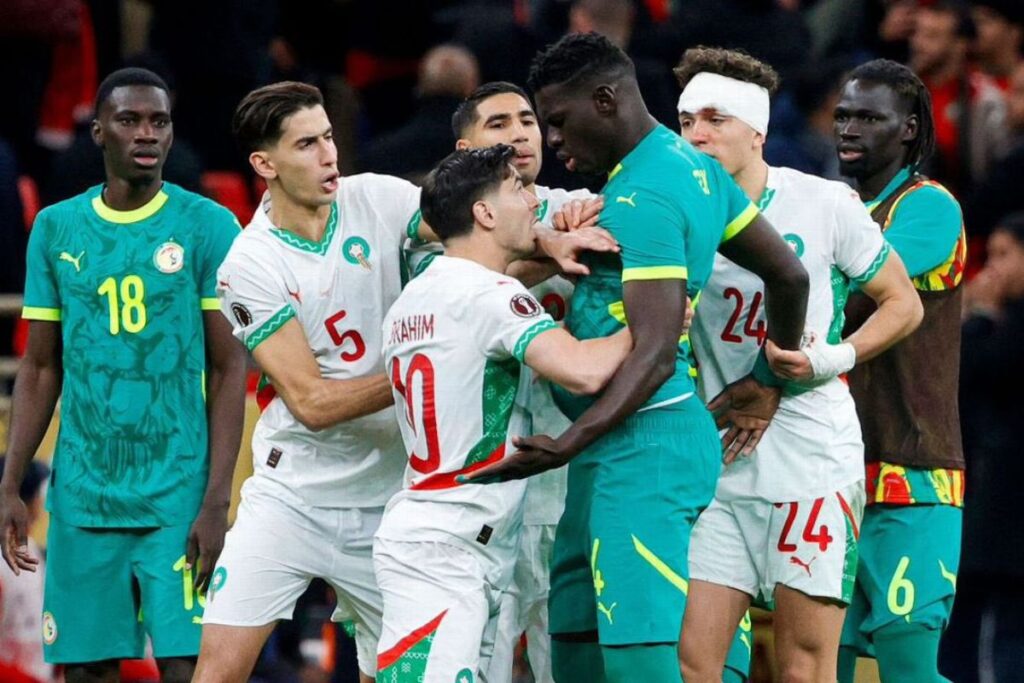
Throughout the final between the two heavyweight countries, Congolese referee Jacqus Ndala had been accused of favoritism towards the host. Accusations reached a crescendo in the 62nd minute, when the referee disallowed Senegal’s goal in an otherwise 50/50 decision. Abdoulaye Seck and Achraf Hakimi had collided in the box before Seck’s header assisted the eventually disallowed goal.
35 minutes later, in the last minute of regular time, chaos erupted at the opposite end of the pitch as El Hadji Malick Diouf pulled back Brahim Diaz in the box to defend an incoming cross. Although play had continued, VAR intervened, and the referee decided to award a penalty, sparking a defiant reaction from the Senegalese players. Feeling they had been cheated, Senegal’s coach, Pape Thiaw, ordered his players off the pitch.
Post-match, Thiaw expressed regret at his decision, admitting that he acted in the “heat of the moment”. He further stated that “it was never my intention to go against the principles of the game I love so much. I simply tried to protect my players from injustice.”
Initial Response & Disciplinary Action
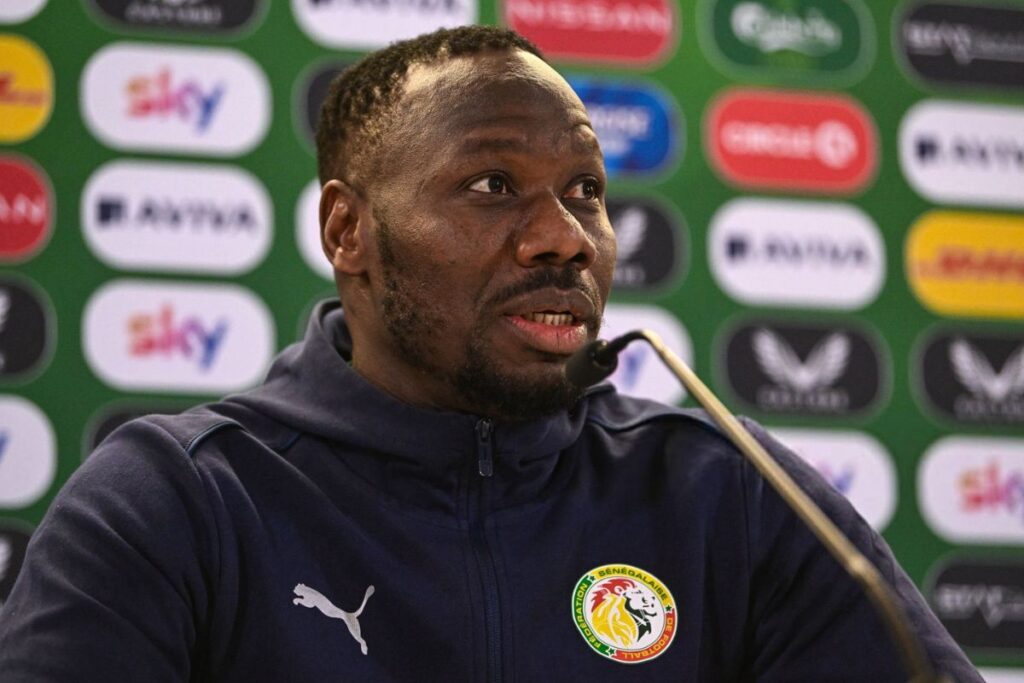
Initially, CAF ignored Morocco’s appeal, which is why taking a different stance two months later has raised eyebrows and left tongues wagging. After initial consideration, CAF decided to punish both countries by fining them accordingly and imposing match bans that are only active for African matches, excluding the World Cup, where both countries would be participating.
Senegal was fined a total of $615,000, and their head coach was banned for 5 African games. Kalidou Koulibaly was banned for two games for violent conduct, Idrissa Gueye was banned for two matches for unsporting behavior, and Sadio Mane received a one-match ban for verbal dissent.
Morocco was fined a total of $400,000, and Achraf Hakimi received a 3-match ban for unsporting conduct and confrontation with the referee. Sofyan Amrabat was banned for two matches for violent conduct, while Ismael Saibari got a one-match ban for unsporting behavior.
The Curious Case of Morocco
By the time the semi-final match between Nigeria and Morocco kicked off, several complaints had been made against the latter. From poor logistics and arrangements for opposing teams to little allocation for opposing fans, these allegations pointed to a lack of sportsmanship by the host nation. Senegalese players also complained of poor treatment right before facing Morocco in the final.
These antics also seeped onto the pitch as several refereeing decisions went in favor of the hosts. Other bizarre incidents include Moroccan ball boys taking towels from opposing goalkeepers in a bid to either distract them, keep them from drying their gloves, or maybe there is a deeper reason they would like to tell. The point remains, these antics and tricks have no place in the beautiful game. By the time the controversial penalty was awarded, dissatisfaction was already at an all-time high.
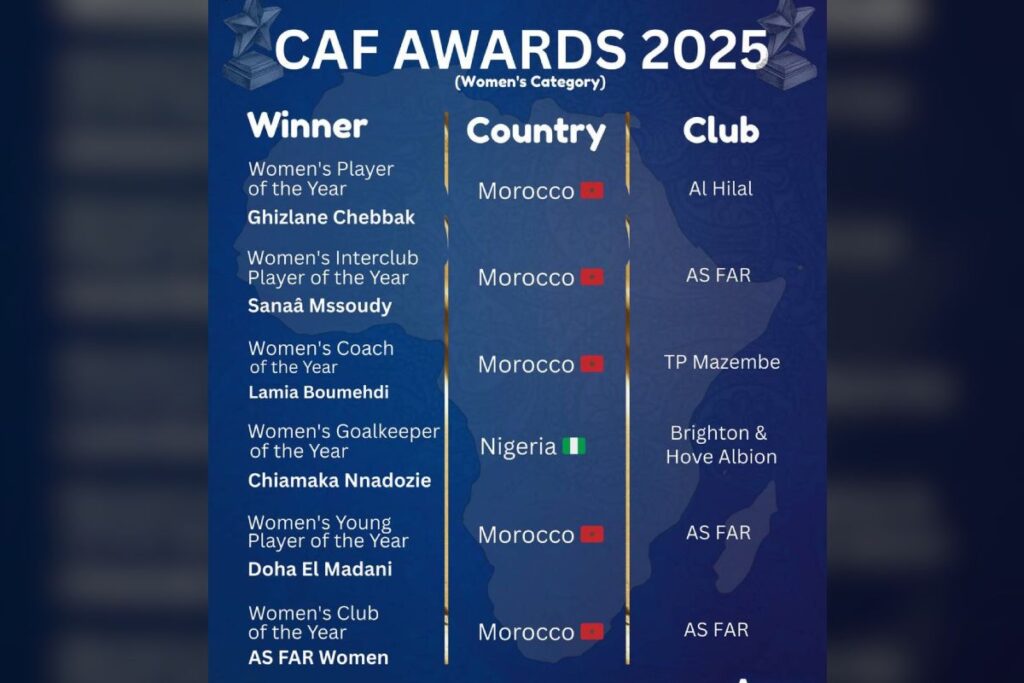
A similar trend was obvious in the female category of the CAF awards. Nigeria had beaten Morocco in the final to clinch the WAFCON title for a record 10th time. Nigeria’s Esther Ajibade won the player of the tournament, Esther Okoronkwo won the golden boot, and 17-year-old Ijamilusi scored in the final. Shockingly, at the awards, all the major categories were won by Moroccan teams, coaches, and players. Bar the Women’s Goalkeeper of the year, which was won by Nigeria’s and Brighton and Hove Albion Goalkeeper Chiamaka Nnadozie.
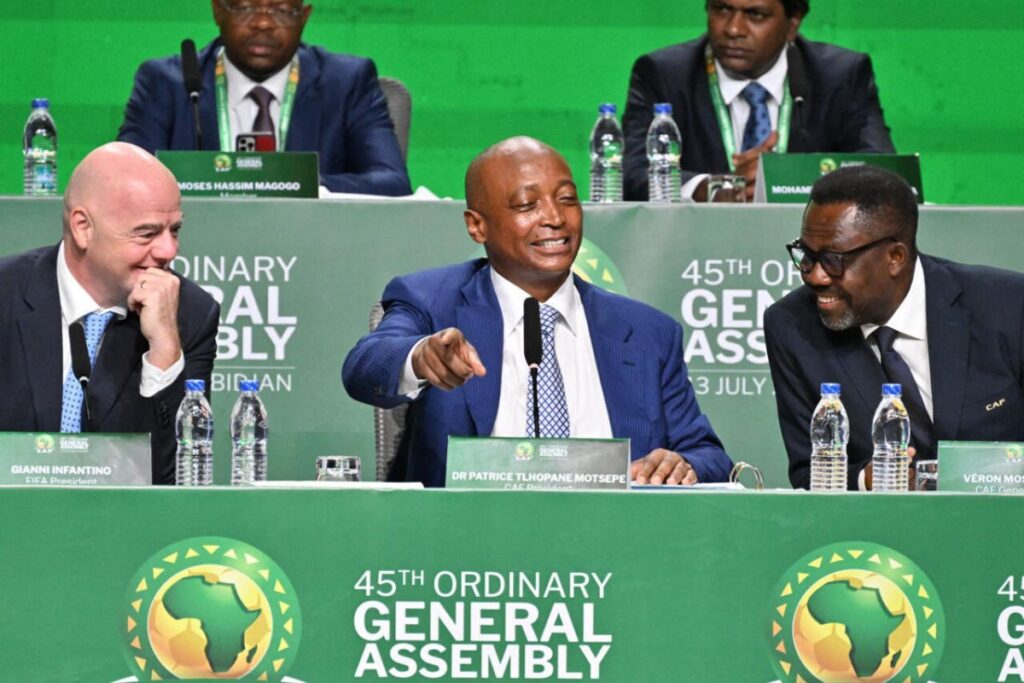
In the corridors of power where relationships and networks often trump public decisions, several fingers have pointed at Morocco’s influence beyond 90 minutes. Morocco’s federation president, Fouzi Lekjaa, has been at the center of this controversy despite keeping a low profile. Fouzi is also the acting 1st Vice President of CAF and plays a major role in the body’s financial and governance decisions. Occupying both roles simultaneously represents a clear conflict of interest and has been touted as a possible reason for CAF’s bias toward the host nation.
Fouzi also boasts a close relationship with FIFA President Gianni Infantino, who initially criticized Senegal’s walk off, claiming that such decisions put “the essence of football at risk.” After CAF’s ruling, however, Gianni has stated that CAF would respect any decision made at the “highest level”, softening his stance and acknowledging Senegal’s right to appeal at the CAS.
The Case as it Stands
CAF claims Senegal infringed on Article 82 of AFCON’s regulations which says that: “If, for any reason whatsoever, a team withdraws from the competition or does not report for a match, or refuses to play or leaves the ground before the regular end of the match without the authorization of the referee, it shall be considered loser and shall be eliminated for good from the current competition.”
As a consequence, Article 84 was also triggered. It states that any team that violates Article 82 will be eliminated from the competition and deemed to have forfeited the match with a 3 – 0 loss.
The Royal Moroccan Football Federation has welcomed CAF’s decision and insisted in their official statement that “it has never been about challenging the sporting performance of the teams involved, but solely to ensure that the tournament’s rules are respected.”
Senegal’s Football Federation has responded, branding the decision unacceptable and claiming it discredits African football. They have also indicated that they will approach the Court of Arbitration for Sports (CAS) in Switzerland to appeal. The appeal could potentially prolong a resolution to the saga, as CAS could take over a year to deliver a verdict.
Interestingly, the rules of the International Football Association Board (IFAB), the independent body that oversees the laws of football globally, say the decisions of the referee connected with matches, including decisions about goals and the match result, are final.
CAF’s Long List of Controversial Decisions
CAF has a history of rulings that have been considered unjust, overstepping its boundaries, or lacking proper consideration. These controversial rulings stretch to 1996, when Nigeria was banned from competing in the AFCON tournament due to political tensions under military president General Sani Abacha. The suspension was thought to be politically motivated as Nigeria had a strong team and a high chance of winning the competition. The decision was never appealed, and CAF’s ruling prevailed.
In 2010, Togo withdrew from AFCON after a deadly attack on their team bus that left 3 staff dead and several other injured in Angola. The attack had a strong psychological effect on the Togolese team, and legendary captain Emmanuel Adebayor initially retired from international duty in its aftermath. He returned the following year after the Togolese FA assured him of his safety. CAF proceeded to ban Togo from the AFCON competition, and was only forced to lift the ban after global outcry and pressure.
In 2015, Morocco itself was a victim. The country had reneged on an earlier agreement to host the year’s AFCON tournament, citing concerns over the widespread Ebola outbreak that ravaged many West African countries. CAF responded by stripping Morocco of its hosting rights, banning them from the next two tournaments, and fining them heavily. Morocco appealed to the Court of Arbitration for Sports, arguing that the penalties were excessive and won. The CAS lifted the ban and drastically reduced the fine.
In 2025, CAF banned Cameroonian legend Samuel Eto’o from contesting for a seat in its executive committee and fined him $200,000 over an alleged breach of CAF’s ethics. The former Inter Milan and Barcelona star contested the verdict at the CAS, claiming that the ban and fine were politically motivated and won. The ban was lifted, and Eto’o went on to win his election unopposed, becoming a member of CAF’s executive committee as the UNIFFAC representative.
In the ongoing case against Senegal, several discrepancies have also been uncovered alongside allegations of favoritism towards Morocco. A typical CAF appeal panel is meant to consist of nine members; however, the panel that revoked Senegal’s AFCON win only had five members present, with one member no longer eligible to serve and four members absent.
To further prove that fate has a sense of humor, Morocco won their first AFCON title against Guinea in 1976, after staging a walkout in the same match. The Guinean Football Federation has also called for the incident to be reviewed, arguing that decisions regarding walkoffs should also apply to historical matches. However, CAF rules did not exist at the time, and analysts have opined that they can rarely be applied retroactively.
Conclusion
After Senegal’s appeal to the Court of Arbitration for Sports, all decisions will remain at the status quo until the top governing body reaches a verdict. Such a ruling comes after careful investigations and deliberation and could take a considerable length of time. The Senegal FA has also claimed to have evidence of corruption against several members of the CAF appeal panel; this could add another interesting dimension to the case. In the meantime, several Senegalese players have rejected CAF’s ruling, citing that the match was won on the pitch and not through backdoor decisions.
How things go depends ultimately on CAS’s ruling, and the continent can only keep its fingers crossed as the world watches.