





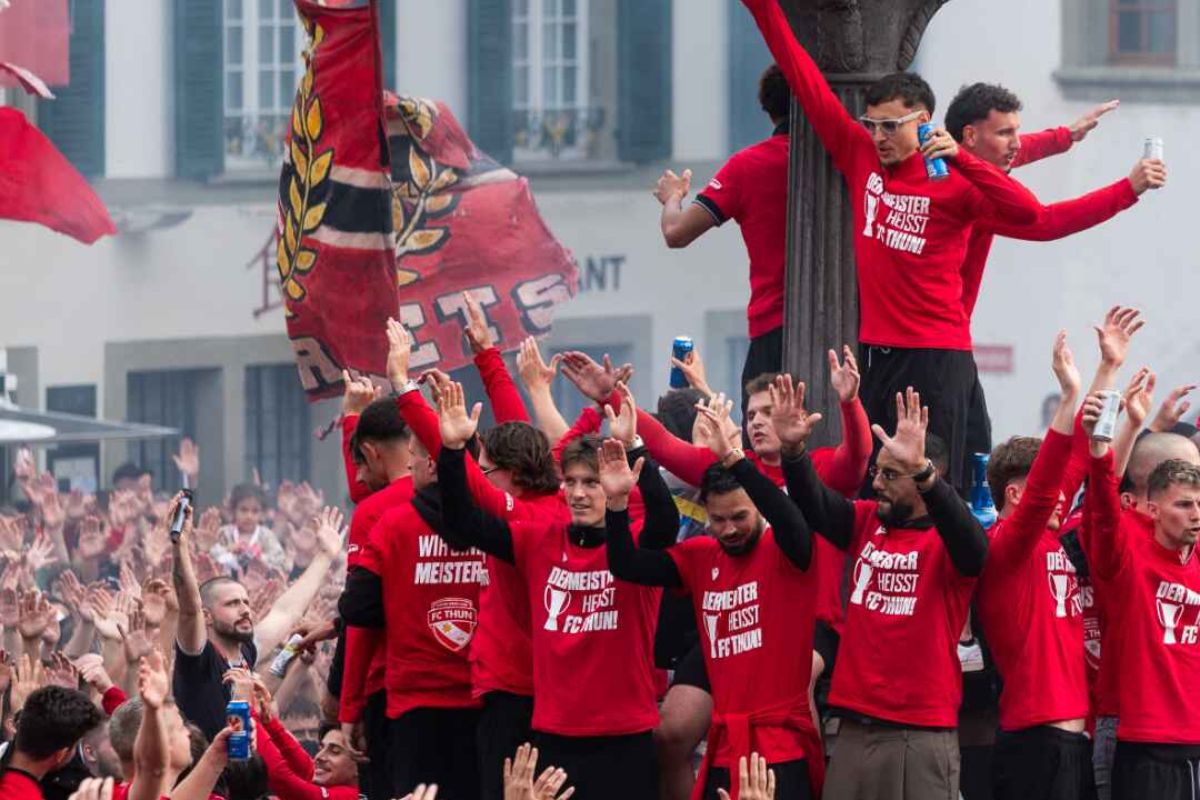
FC Thun (Fussballclub Thun 1898) shocked the world and made history after winning the Swiss Super League on May 3, 2026. The club’s achievement is nothing short of a “fairytale”, considering they were promoted from the second tier just one year ago. Only to upset the status quo and order of events by winning the League title and their first major silverware in the club’s 128-year existence.
FC Thun are Champions with 74 points from 35 matches and three games in hand. As juicy as all parts of the proverbial cake are, the icing for them is a return to Champions League action. The club couldn’t have found a better leader than club legend Mauro Lustrinelli. No one could have guessed the heights he would reach when they signed him as manager three years ago.
Humble Beginnings
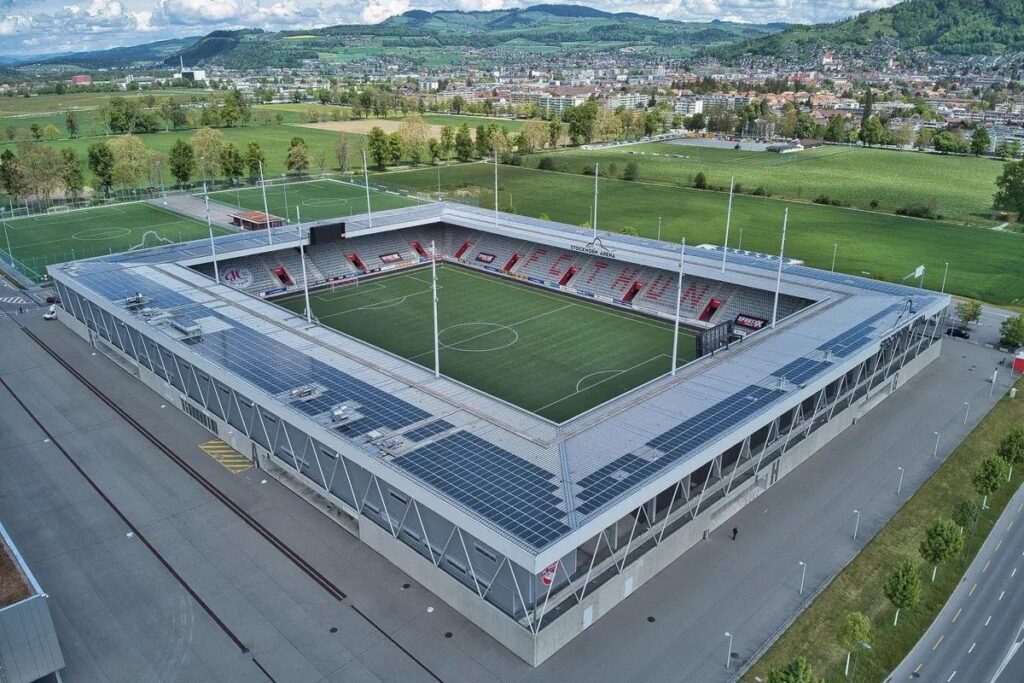
To better understand the magnitude of this triumph, one must first understand the broader tapestry of Thun in Swiss football. Founded in 1898, the club has long existed on the margins of Switzerland’s most elite teams. Nestled in a picturesque town by Lake Thun, away from the financial and cultural centers that typically dominate the game, they have had to earn their success brick by brick.
For decades, Thun oscillated between divisions, occasionally experiencing limited success but not enough to impose itself nationally. Their golden era came in the 2000s under coach Urs Schönenberger. In 2005, they finished second in the league and qualified for the Champions League qualifiers. Defying expectations, Thun defeated teams like Dynamo Kyiv to reach the group stages. Drawn alongside Arsenal FC, Ajax, and Sparta Prague, they put up a fight, defeating Sparta Prague and narrowly losing 2-1 to Arsenal at Highbury. At their exit from the competition, the team had left an impression on anyone who watched them play.
Following their Champions League era, Thun continued to remain competitive domestically and frequently qualified for European competitions, including the UEFA Europa League. However, financial limitations eventually caught up with the club. In 2020, they were relegated from the Swiss Super League after more than a decade in the top division. Instead of collapsing, Thun rebuilt patiently with a long-term approach centered on stability and club identity.
A fairytale Promotion
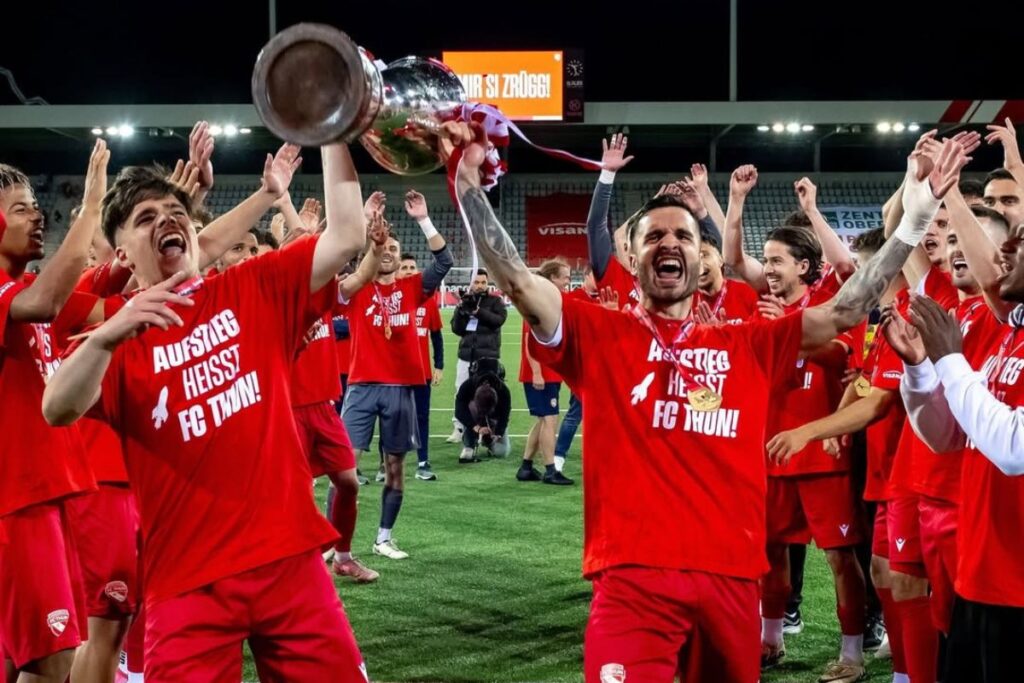
In the first signal of what was possible, FC Thun won the 2024–25 Swiss Challenge League, securing promotion to the Swiss Super League. Goals by Layton Stewart and Ethan Meichtry in their 2–1 victory over FC Aarau ended a five-year absence from the Swiss top flight with five matches to spare. This season, Thun took the league by storm, leading the table and becoming “winter champions” ahead of the winter break in December.
The team was led by a balanced attack and a strong local core with Elmin Rastoder (14 goals), Christopher Ibayi (10 goals), and Leonardo Bertone (10 goals) emerging as top scorers. However, the players perfectly complemented the executive backbone of head coach Mauro Lustrinelli, assistant coach Nelson Ferreira, and president Andres Gerber. All three staff played in Thun’s 2006/07 Champions League season and became a tight-knit unit determined to elevate the club to its potential.
What Worked?
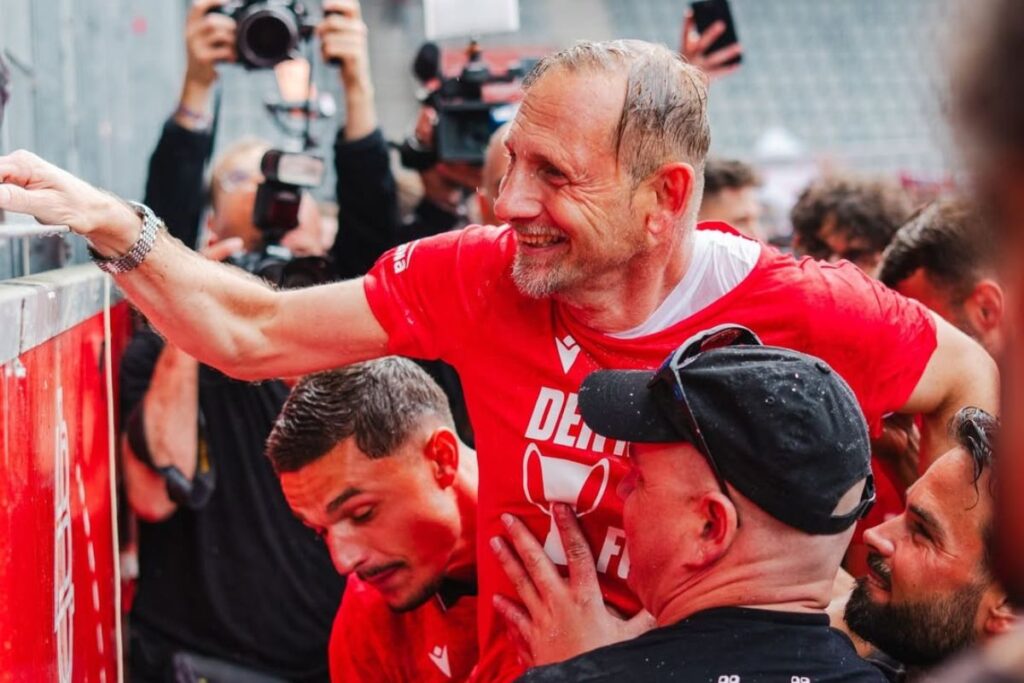
History is not made by wishing. It’s rare for a recently promoted team to lift the League title but when it happens, it shows the direction football should be headed towards. However pure the intentions or visionary the plans Thun’s executives made for the club, it took several moving parts to become champions. For Thun’s amazing title win, these factors were –
A Tactical Coach

At the heart of this transformation was their manager, Mauro Lustrinelli, a figure whose philosophy fused discipline with expressive and attacking play. His Thun side was built on structure, coordinated pressing, and rapid transitions with enough freedom for players to display individual brilliance.
Since Lustrinelli was appointed head coach in 2022, he transformed an unassuming team into champions using very specific blueprints. Most notably, his execution of vertical and fast football featured quick attacks with as few passes as possible. He once famously asked, “If we can score with two passes, why do we need 10 or 20?”
Club Culture & Adaptability
Thun’s approach to player recruitment played a key role in their success, with the club focusing on team chemistry over expensive signings. Keeping the same core group, the club believed that the team’s winning mindset was more valuable than importing established talent. This philosophy prioritized team building and protected the club financially. But just as importantly, it developed the synchronicity of the players and encouraged the integration of talented academy youngsters who already embodied the club’s philosophy.
In the Challenge League, Lustrinelli’s deployment of high-intensity pressing made the team an effective machine. But this season, Thun’s success was built on conceding the fewest goals in the league. As the season progressed, Lustrinelli evolved from the previous season’s constant high pressing to focus on defensive solidity, cutting off passing in wider areas, and a strict marking system. This combination, alongside being clinical at the other end of the pitch, proved a fantastic recipe for success.
Big Game Players
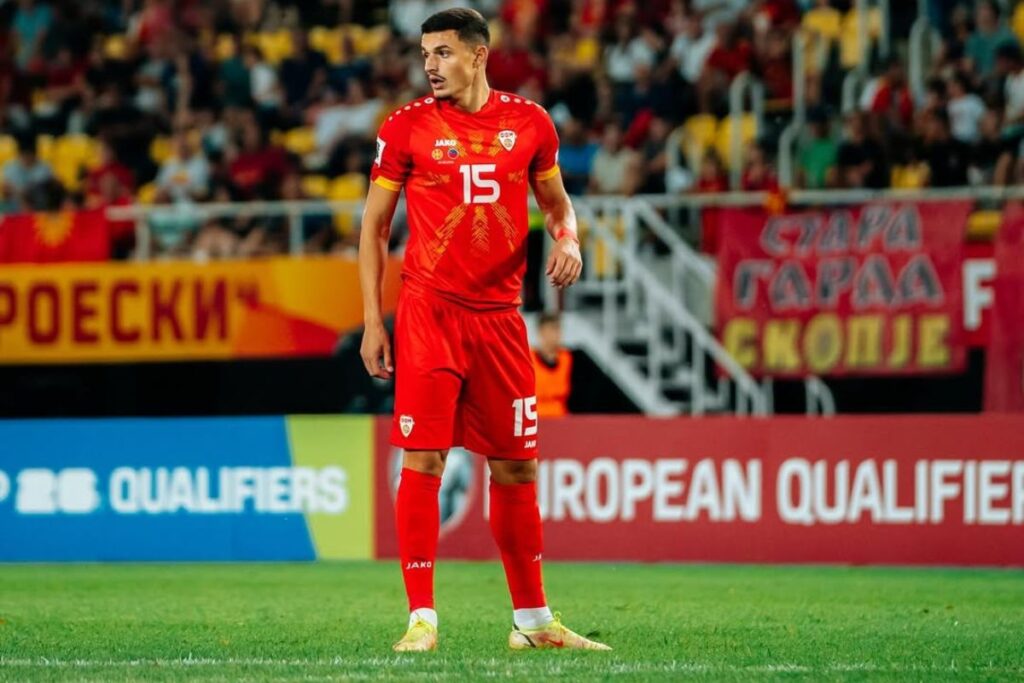
FC Thun’s journey was built around a familiar group of players who maintained their form and leadership through both title-winning campaigns. For the key attacking threat, look no further than Emil Rastoder. Since signing a three-year deal in June 2024, he has been the team’s primary offensive engine. In the promotion season, Rastoder scored 5 goals and provided 2 assists as the club clinched the Challenge League. In the Championship, instead of struggling against tougher top-flight defenses, he excelled, contributing 14 goals and 6 assists.
The club’s captain, Marco Bürki, provided the continuity and defensive stability required for back-to-back title runs. At 32, Bürki anchored a defense that conceded just 41 goals in the Super League, one of the best records in the division. At the base of the midfield, Leonardo Bertone was the tactical heartbeat of the team. He was responsible for breaking up opponent attacks and starting offensive transitions. He was crucial to the team, chipping in 10 goals and two assists.
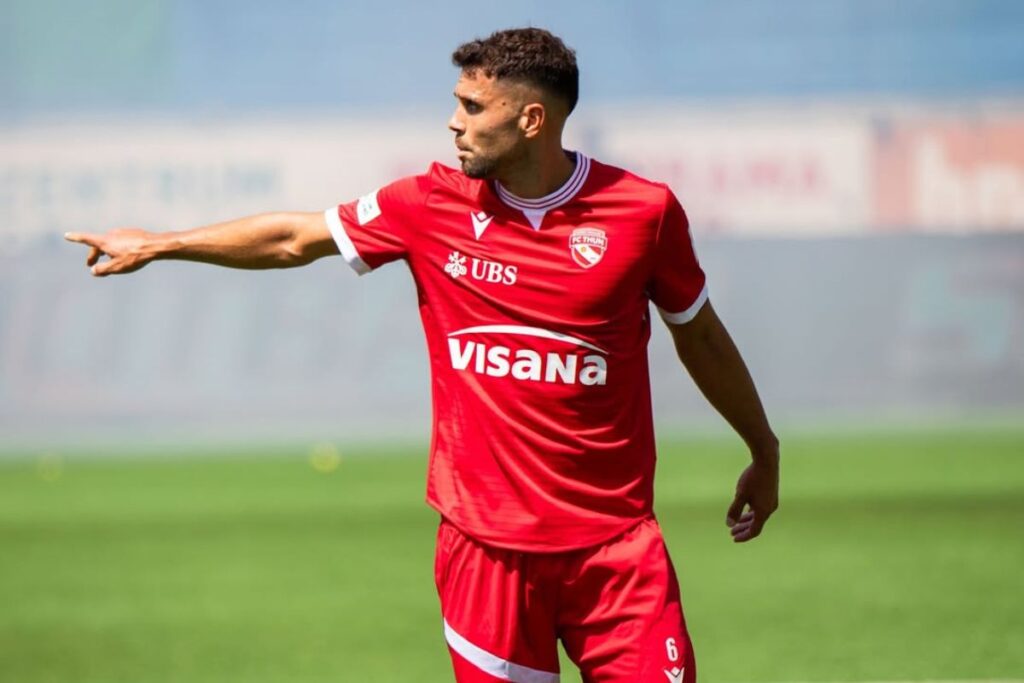
Thun’s “fairytale” will be incomplete without local academy products who rose through the ranks. 20-year-old midfielder Franz-Ethan Meichtry was let go by the academy in 2020, only to return in 2023 and become a regular in both the 2024/25 promotion and the 2025/26 title win. Valmir Matoshi was another homegrown talent who earned a glowing reputation. Notorious for scoring key goals, Matosi’s winner against FC Basel was instrumental in their title charge and helped solidify Thun’s lead on the table.
Early Momentum
Contrary to many newly promoted sides, Thun exploded out of the gate. They won their first four matches, including a statement 4-0 away win against one of the league’s more consistent teams, FC Zürich. By the winter break of 2025, Thun sat three points clear at the top with 13 wins, 1 draw, and 5 losses.
From the moment they stepped back into the Super League, Thun abandoned the cautious “survivor” mentality typical of promoted sides. Instead, they operated with a clinical edge, scoring 76 goals in 35 matches. They secured 24 wins as well, often out-pacing rivals who were shockingly inconsistent. Although they suffered a “tricky spell” later in the season, losing four of five games in April/May, their massive 11-point lead meant they sealed the title with three games to spare.
Comebacks and Winning Streaks
Thun’s title-winning season was aided by an impressive mid-season surge and several high-pressure comebacks. The likes of their comeback against FC Zürich, where they trailed 2-0 at halftime only to roar back for a 4-2 victory, gave the team an unshakable optimism. Manager Mauro Lustrinelli immortalized that moment as when he knew the team had the “winning mentality” to win the title.
Between January and March 2026, while rivals Basel and Young Boys faltered, Thun embarked on an incredible 10-match winning streak. In January, they effectively ended the title race with a dominant 4-1 home thrashing of defending champions Young Boys. Averaging only 46.3% possession, the ninth-lowest in the league, yet leading in chance creation and shots on target. FC Thun’s rise to be champions of Swiss football was a masterclass in calculated aggression.
Defensive Discipline
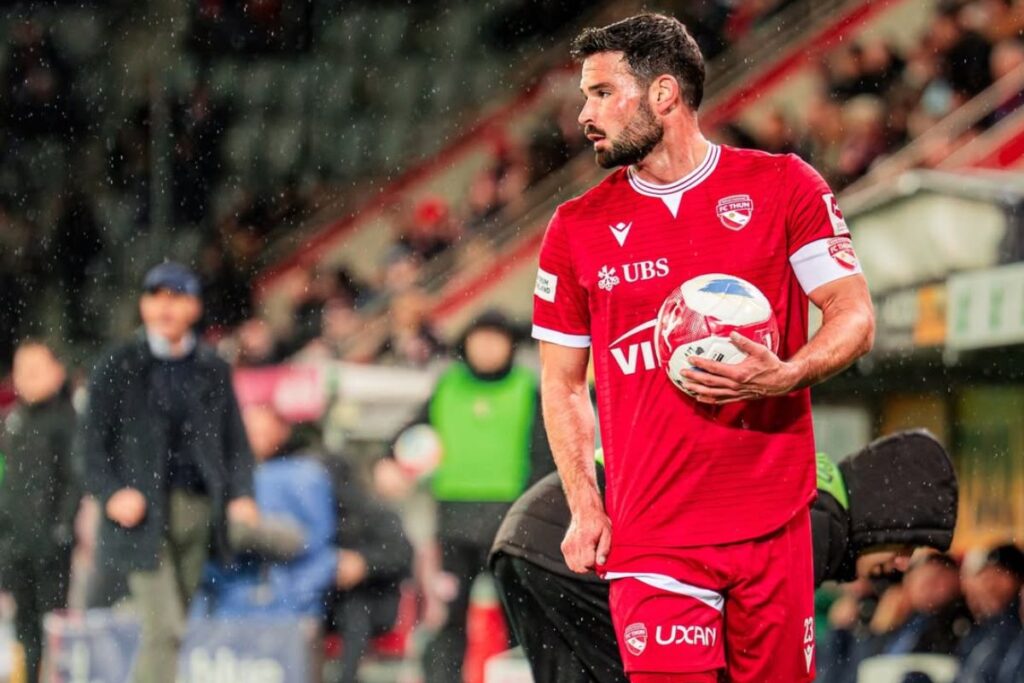
Defensively, the numbers tell a story of grit rather than grace. While they only managed to keep six clean sheets across the entire season, Thun never allowed matches to spiral out of control. They conceded a league-low 1.17 goals per game, a feat achieved by a disciplined “low block” that forced opponents into shooting from distance. Goalkeeper Niklas Steffen acted as the final fail-safe, overperforming his expected goals-against metrics by nearly 10 goals.
Away Form and Rival Thumping
The true weight of their achievement is felt in their performance against the league’s established giants. While Young Boys and Basel often looked vulnerable on the road, Thun became “Road Warriors,” collecting 36 points away from home. Their ability to go into hostile environments like the Wankdorf Stadium and secure a 2-1 win proved they weren’t just a flash in the pan. By consistently taking points off the “Big Three,” they gained considerable comparative advantage while proving their form was more than a lucky break.
Why It Matters
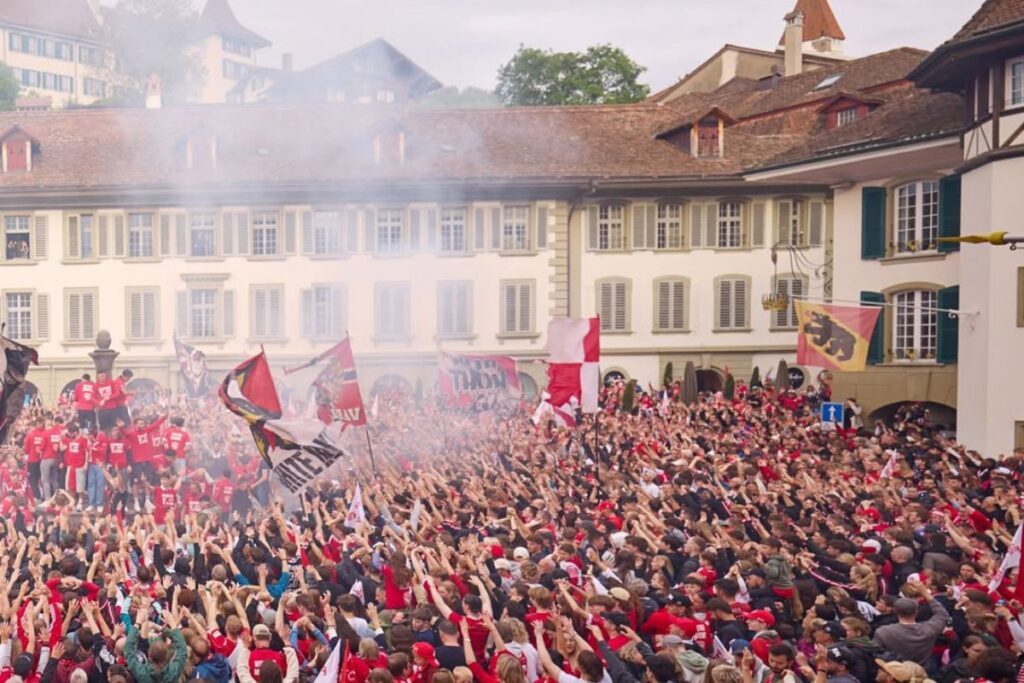
Since the inception of the Super League in 2003, every single trophy has been claimed by one of only three clubs: FC Basel, BSC Young Boys, or FC Zürich. The historic 2025/26 title win by FC Thun has shattered the long-standing “triopoly” that has defined Swiss football for over two decades. By becoming the first team outside this elite group to lift the trophy in the modern era, Thun has effectively reset the expectations for what is possible in the division.
For nearly 23 years, the league has been characterized by massive financial and sporting gaps between the top three and the rest of the pack. FC Basel’s legendary streak of eight consecutive titles (2009–2017) and Young Boys’ subsequent run of six titles in seven years had created a predictable hierarchy. Thun’s triumph, achieved with an estimated market value of €16 million, roughly a quarter of Young Boys’ budget, proves that superior scouting and tactical unity can overcome sheer financial weight.
This victory is a major shift in the league’s competitiveness. During the season, traditional heavyweights struggled with consistency while smaller clubs like FC St. Gallen and FC Lugano occupied the top spots for long stretches. This newfound parity is a new era for the Super League. One where the “middle class” of Swiss football can legitimately challenge for Champions League spots and silverware.
Thun’s journey from a second-tier promotion to a top-flight title within a single year can become a blueprint for smaller organizations. Clubs like Winterthur, Yverdon-Sport, and Lausanne-Sport can now view their own trajectories differently, seeing that a stable core of homegrown talent and a clear tactical identity can bridge the resource gap.
What The Future Holds
As they look toward the 2026/27 Champions League, the focus shifts to whether this high-efficiency model can translate to the European stage. Thun’s first test will be their European journey in the UEFA Champions League. Automatically slated for the second qualifying round for the 2026–27 season, they must survive three rounds of two-legged matchups to qualify for the league phase of the Champions League. However, in the event of elimination, a chance to play in the Europa or Conference League awaits.
Economically, the long-term sustainability of FC Thun’s success hinges on balancing their “fairytale” momentum with the significant financial and competitive pressures of the 2026/27 Champions League. With a high chance of qualifying for some form of European football, the club can expect a significant financial boost. This will provide a guaranteed inflow potentially exceeding €18 million if they reach the Champions League’s group stages, a transformative figure for a club that recently operated on a €5 million budget.
The club’s net transfer spend of just €700,000 stands as a testament to their scouting, tactical cohesion, and financial philosophy. With a title-winning squad that has matured together since their second-tier win, the club is at an advantage. Nonetheless, questions surrounding the sustainability of the approach and whether it can match the quality of competition in Europe persist.
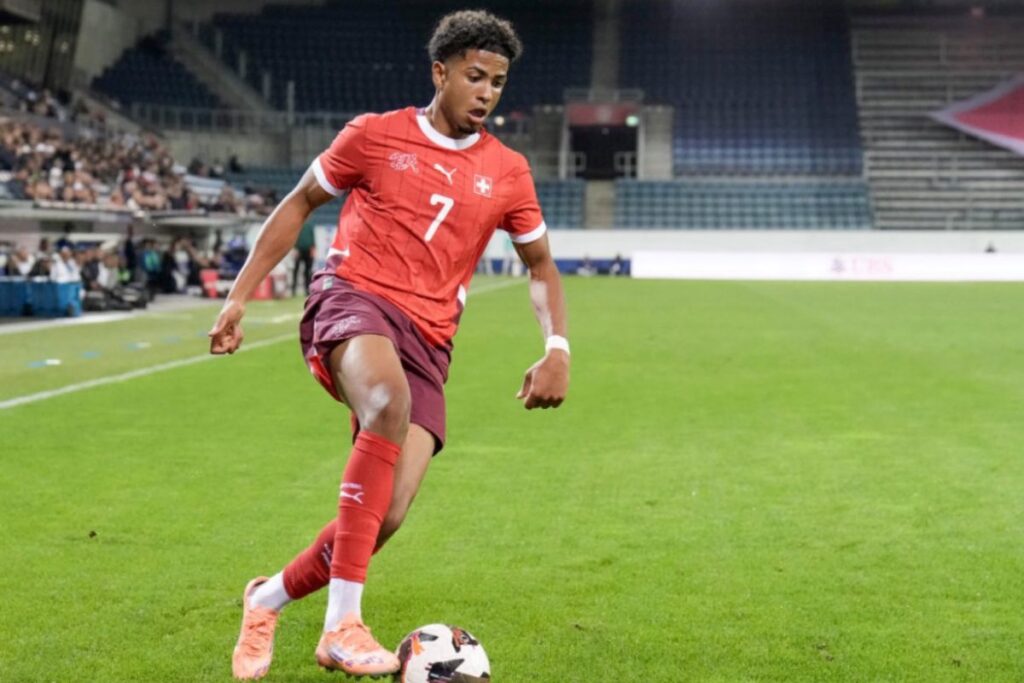
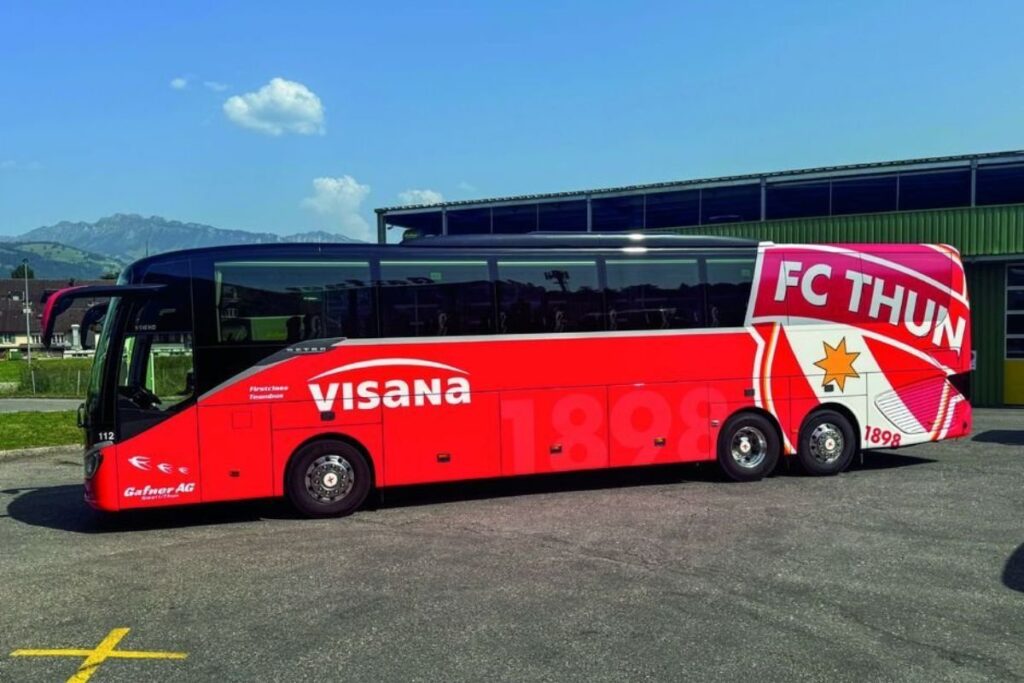
The biggest threat to their sustainability is the potential “raiding” of their squad by larger European clubs. Standout performers like Elmin Rastoder and Franz-Ethan Meichtry will be tempting to clubs looking to strengthen their team. Historically, Thun has generated 12% of its budget through player sales. However, the prospect of Champions League football may encourage key assets to stay for another year. The recent stadium ownership takeover by Visana has also removed stadium rent costs, giving the club more fiscal flexibility to resist low-ball offers
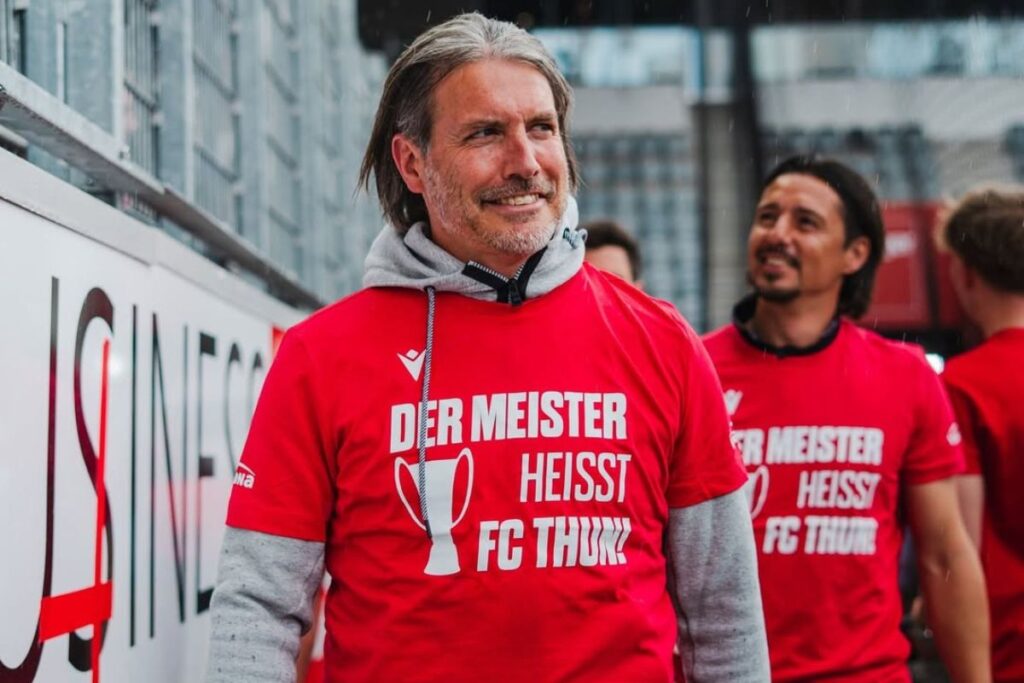
The most stable pillar for the club is Mauro Lustrinelli, who is contracted until June 2028. His long-term commitment allows the club to reinvest its European earnings into the youth academy and women’s development, as outlined in its recent CHF 3 million investment plan. If it continues to leverage its philosophy, Thun could be positioning itself to be a consistent “top-six” contender rather than just a fleeting success, their original intentions before emerging as champions.
Conclusion
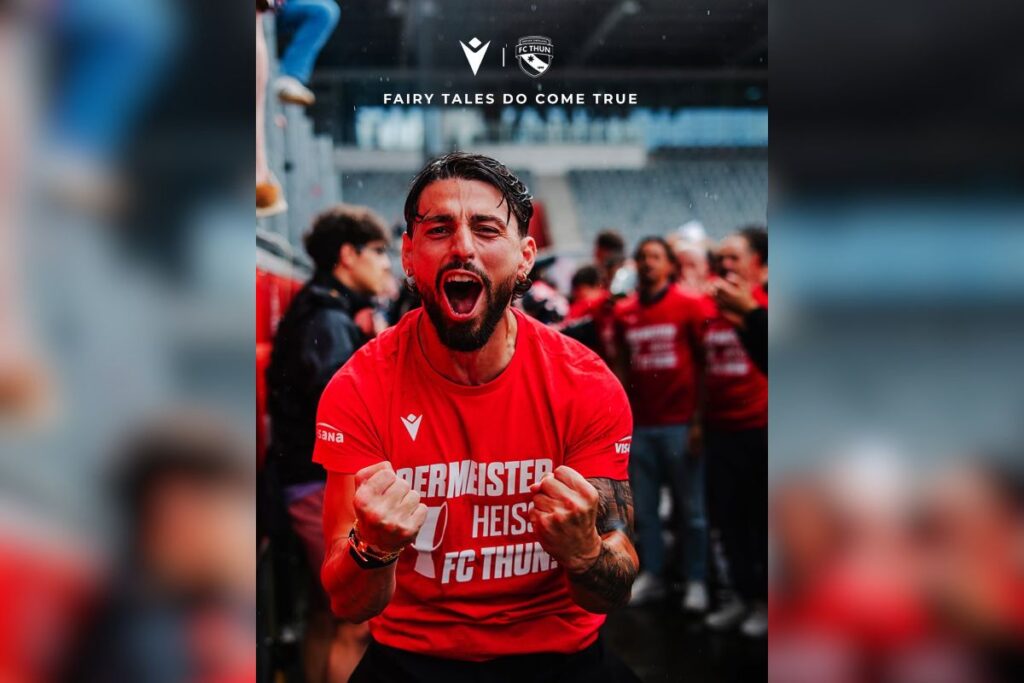
After re-writing the record books, exactly how FC Thun fare next season will be closely watched across the sport. All fingers point to the start of something sustainable as the club’s long-term philosophy is finally paying off. The team will only improve from additional talents, while the economic windfall of a returning European presence is set to boost the club’s operational targets.
Football always roots for a good underdog story, and many successful clubs have had tide-changing moments in their journey with major impact. How well the club capitalizes on this depends on several factors. However, regardless of how the pendulum swings, history will always remember the magical fashion in which FC Thun emerged as the conquerors of Switzerland.