





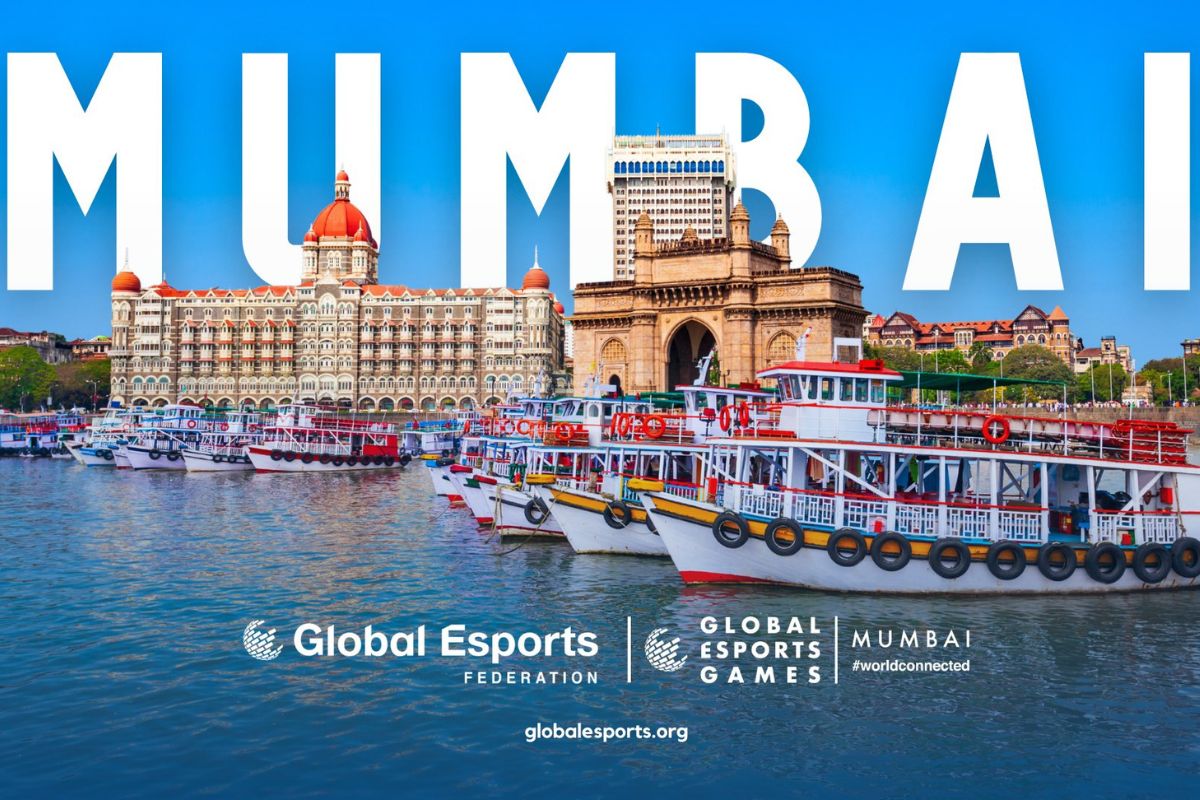
The Global Esports Games is a mega competition organized by the Global Esports Federation for its federation members. The Global Esports Federation is a non-governmental organization that coordinates some major esports activities globally. With over 180 member countries and four continental Esports Development Federations: Africa, Europe, Oceania, and Pan-Am, the GEF is one of the biggest Esports authorities.
A key difference between Global Esports Games and other Esports competitions is the unique arrangement where athletes compete as national representatives. In terms of structure, the Global Esports Games is the closest thing Esports has to an Olympic or World Cup competition, as countries qualify and then send delegations to the world finals. This format is growing increasingly popular with the esports Nations Cup and the esports World Cup coming up later in the year.
The Road To Mumbai
The Global Esports Games are a cultural phenomenon in the global gaming sector. The maiden edition of the Global Esports Games took place in Singapore, the headquarters of the Federation, in 2021. The next two editions took place in Turkey in 2022 and Saudi Arabia in 2023. The 2023 edition is the largest held convention to date, featuring 950 athletes competing from over 100 countries.
Minor Setbacks
The 2024 edition was initially slated to be held in Chengdu, China, but the organisers rescheduled for early 2025 after “issues” with the Chinese authorities. This cancellation drew criticism from several participants, many of whom had prepared for the event in advance. British DOTA 2 participant, Bellemiku, spoke out against the sudden change of plans, saying “the lack of transparency has been totally unacceptable” and pointing out that her efforts to secure extra holiday days from work were now “useless”.
Further delays stretched the program’s kickoff beyond early 2025, and a new date was not announced until later in the year. The Global Esports Games was renamed the GEG 2025 World Finals even though the event kicked off in March 2026. Irrespective of the setbacks suffered by the competition, the Global Esports Federation has announced that the previously scheduled 2026 edition will proceed as planned in Los Angeles, California.
Opening Ceremony & Kick Off
The opening ceremony was held on March 19th, the same date as the Guhdi Padwa, the spring festival marking the start of the lunisolar new year for certain Hindus. This date was specifically chosen as a symbol of the unique combination of tradition and innovation, symbolising a new beginning for Esports in one of the world’s most vibrant digital economies. The first esports or GEF event to be held in South Asia, it was only right for such a special occasion to flag off the event.
Venue & Significance
The event was held at the iconic MMRDA Grounds in the Bandra Kular Complex. The venue was re-imagined and fitted as the “Global Esports Arena Mumbai”, a purpose-built stage to showcase one of the world’s biggest esports competitions. One of Mumbai’s biggest outdoor and exhibition venues, the MMRDA Grounds, is fittingly at the heart of the city’s financial and technology district.
Games, Format & Results
The games featured competition centered around two games. Real-time strategy game Clash Royale and multiplayer battle online arena game, DOTA 2. Countries participating in the DOTA 2 competition had to field 5 team players, while only one player competed in the Clash Royale event. Countries participating in both events were required to field a total of six representatives. Overall, the games welcomed 48 elite athletes from 19 countries.
DOTA 2
The format for the DOTA 2 competition featured a total of 7 teams split into two groups of 4 and 3 members. The teams in each group faced off against one another in a single round-robin best-of-3 format, with the top two teams from each group qualifying to the playoffs, a double-bracket elimination phase. The playoffs are conducted with a double bracket for losers and winners, guaranteeing that only the top two teams qualify for the grand final.
Turkey, Mongolia, South Africa, and Argentina made up the first group, while the second group consisted of India, Australia, and Ghana.
In the first group, Turkey won all 3 of their matches, emerging as group leaders with Mongolia following in second place after winning their other 2 fixtures. South Africa defeated Argentina in its only win, while the South Americans lost every match they played and exited at the bottom of the group.
Three countries made up group 2. India won both of their matches to emerge as group leaders, while Australia defeated Ghana, clinching the second spot. Ghana lost both of its matches and ended up at the bottom of the group.
Advancing to the playoffs, Turkey and Australia faced off in the first match, with the former emerging victorious. Mongolia bested India in the second fixture. Turkey then ran out winners in the resultant decider to book their place in the grand final.
In the loser brackets, India defeated Australia in the first round. Before losing again to Mongolia in the second round, securing the latter’s place in the finals.
Mongolia and Turkey faced off once more in the finals, with Turkey ultimately clinching the title. Mongolia came in second, with India rounding up the top three.
Clash Royale
This year’s edition of the Clash Royale event featured a total of 13 countries, namely: Cuba, Senegal, India, Kyrgyzstan, Indonesia, Great Britain, Kazakhstan, Hungary, Peru, Portugal, Benin, Tunisia, and the USA. A single-player tourney, Clash Royale shared similarities with DOTA 2 in its structure and formats, with a few tweaks.
Featuring 13 participating countries, 10 of them faced off in five first-round matches, with the remaining three countries (Benin, Tunisia, and the USA) strategically introduced in the next round. The winner and loser brackets run concurrently in a best-of-three format until the winners of each bracket face off in the grand final. The final is a best of 5, and the country from the Winners’ bracket automatically has a 1:0 lead.
India secured their spot in the final by defeating the USA in the loser bracket finals before squaring off against Kazakhstan in the grand finals. With all to play for, both teams battled fiercely, with India emerging victorious, inspired by a miraculous comeback despite going 2:0 down. 19-year-old Anuhith Gosala, who secured India’s title, couldn’t contain his excitement in his public address, saying, “This moment is surreal, to win the Grand Finals here in India in front of a home crowd makes it even more emotional. The preparation was relentless, the pressure was intense, and every match tested my limits, but that’s what makes this victory so special.”
India was declared the overall winner of the Tournament after claiming the bronze medal in the DOTA 2 competition, in addition to their Gold medal in the Clash Royale event. A fitting conclusion to the iconic esports tournament organised by the Global Esports Federation with support from EFfag Corp, the Government of Maharashtra, and Maharashtra Tourism.
Other Events & Announcements
Alongside the Esports gaming competitions, the Federation also held the Global Esports Festival and the Global Esports Conference, maximising the experience for not just athletes but stakeholders, fans, and spectators alike.
Global Esports Conference
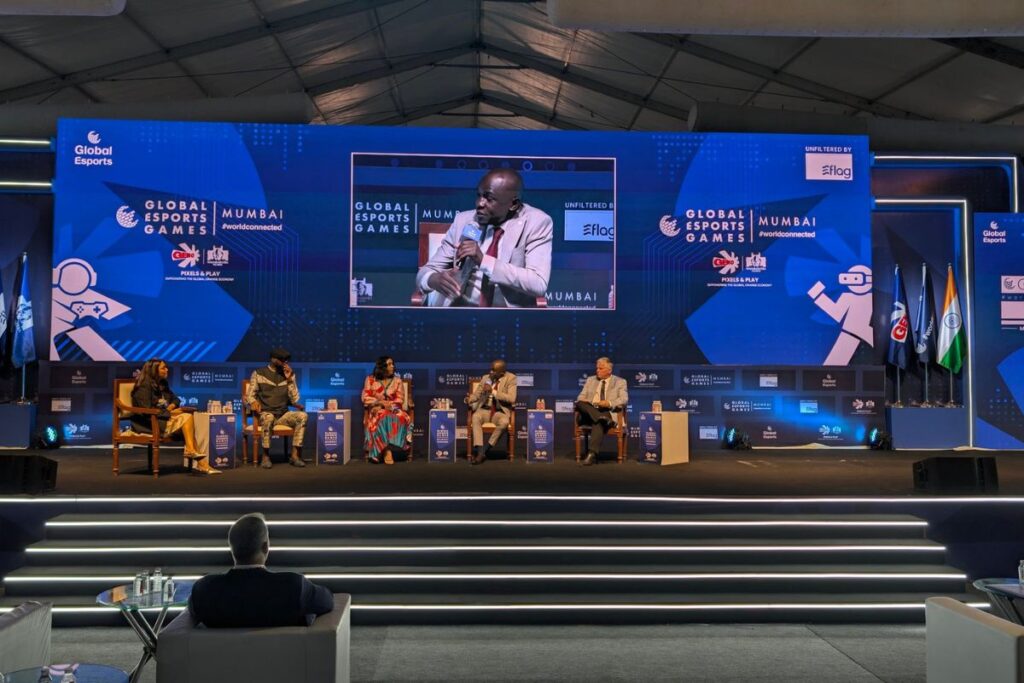
The GEF conference is the official global esports summit. It was designed to shape global esports policy, drive long-term industry development, and align governments, investors, federations, and other relevant stakeholders. This year’s edition highlighted the importance of esports as not just a means of entertainment but also a tool for national youth development.
The GEF official programme ran along two major parallels, with the first being India’s digital generation. The first panel centered on India’s massive young population, its digital infrastructure, and what a structured esports ecosystem could mean for skill development, youth identity, and economic participation. India’s market is projected to triple from $38 million in 2025 to $132 million by 2030, with a yearly growth rate of 26%. Its ecosystem currently includes 2.8 million competitive esports players, 40 professional teams, and nearly 20 major game titles.
The second panel focused on Esports as global infrastructure, exploring governance, trust, and the next digital economy. This broader geopolitical and governance panel examined how the global esports ecosystem should be structured, regulated, and invested in as a formal pillar of the digital economy.
In the Federation’s own words, “Esports is no longer emerging, it is a powerful, innovative, global infrastructure. GEFcon26 Mumbai is where strategy becomes action.” Speaking directly to the economic perspective, Maharashtra’s Chief Minister pointed out India’s “rapid growth in the AVGC (Animation, Visual Effects, Gaming, and Comics) sector” and their commitment to positioning India as a “global hub for digital talent, entrepreneurship, and youth-led growth.”
Global Esports Festival
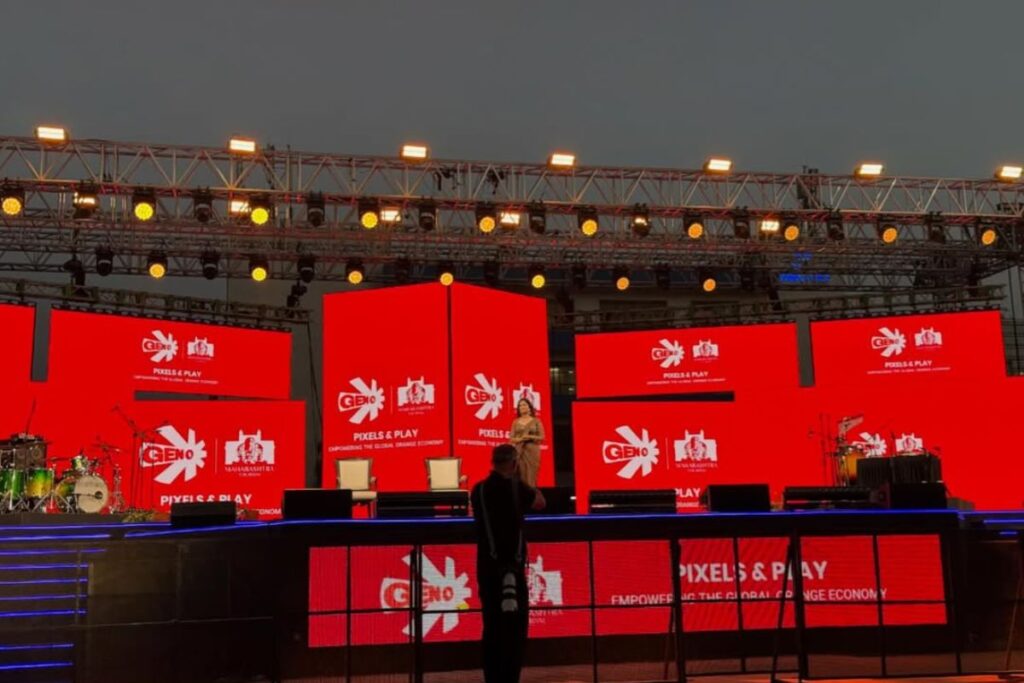
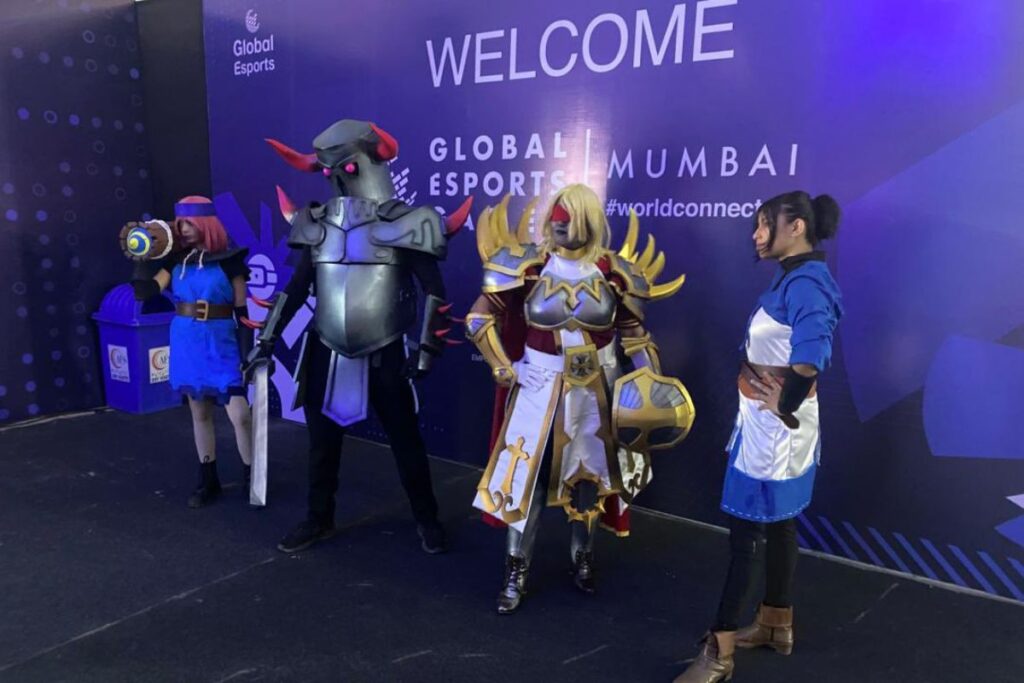
A festival-like experience offered to fans and attendees, the Global Esports Festival encouraged aspiring players to interact with esports culture via its featured activities. This fan-first event was designed to make the games accessible to Indian gaming fans and to connect Mumbai’s vibrant youth identity to their first esports experience.
Attendees met with competing players and major Indian gaming influencers at the festival. Utilising the unique nature of the MMRDA grounds, it also featured interactive showcases and technology exhibits where gaming brands, esports technology companies, and content creation platforms displayed their products and engaged directly with consumers.
The festival also incorporated community tournaments that allowed aspiring gamers to engage first-hand with esports culture. Allowing grassroots Indian gamers an avenue to participate in the games and not just spectate. An important display of the culture the GEF is trying to build, an environment where a festival participant could become a World Finals competitor in the future.
The impact of these events were far-reaching. Gaming influencers have tens of millions of followers across social media, sparking major conversations and attracting widespread viewership throughout the event, with the games registering over 40 million viewers globally.
A Global Ambassador
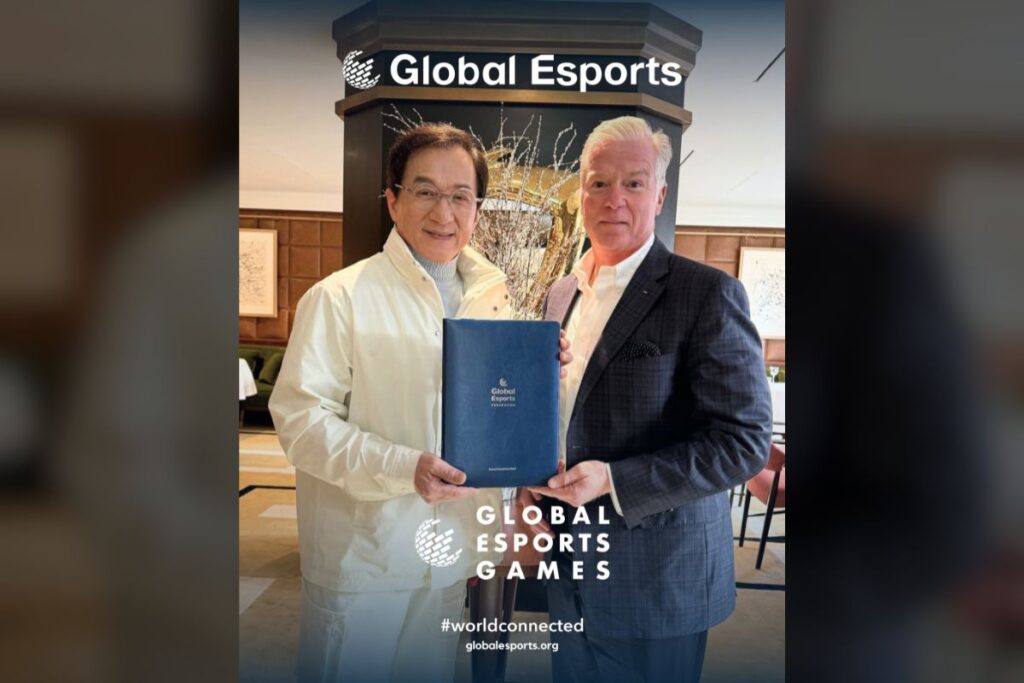
One of the major highlights of the Games included the announcement and unveiling of Asian actor and global icon Jackie Chan as an ambassador of the Global Esports Games. His appointment centered around three key qualities the Federation could parallel with the spirits of esports: discipline and mastery, creative evolution, and global cultural impact. Jackie Chan appeared alongside recently elected president Paul J.Foster, a strong statement of intent by the federation to bridge the gap between traditional entertainment and competitive gaming.
The 10 Year Agreement
In another milestone achievement for Esports in India, the Global Esports Federation announced a strategic 10-year partnership with the host country. This partnership focused on developing the next generation of digital athletes and creators, expanding opportunities in the digital economy, and fostering innovation across esports, technology, and media.
African Representation At The Games
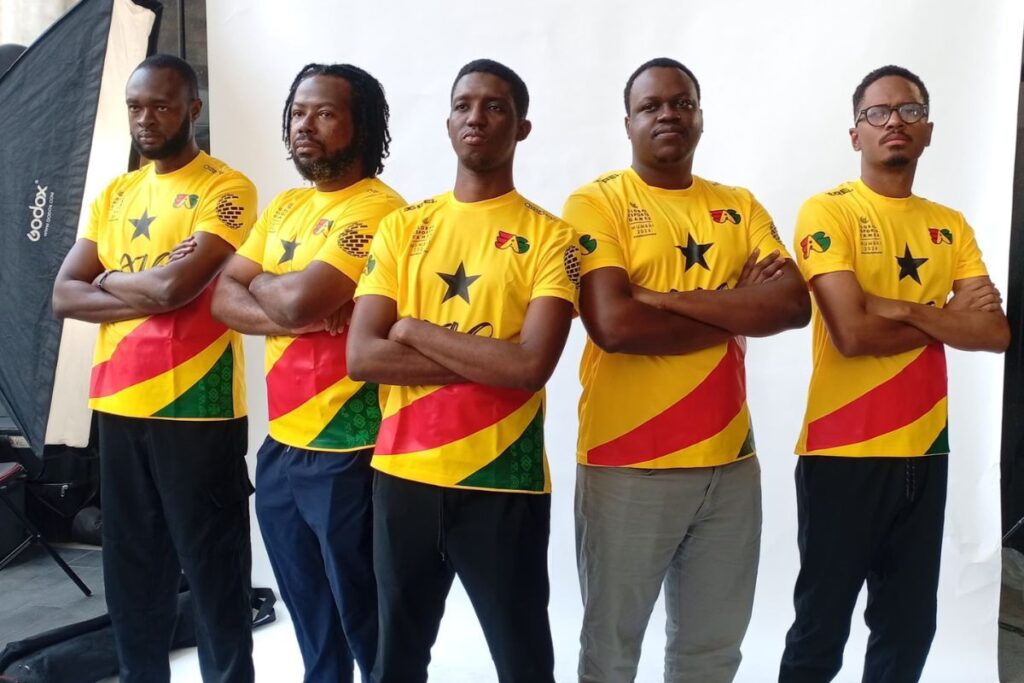
Esports is steadily growing in developing and emerging markets, with Africa remaining a cornerstone. Several countries have been developing their Esports presence across the continent, and the rewards are gradually bearing fruit. The African delegation at the Mumbai World Finals is the highest ever in the competition’s history, reflecting the massive development undertaken by the GEFs Esports Development Federation for Africa, including during the qualification stage.
We break down the African nations that represented Africa at the games –
South Africa
South Africa qualified through the South Africa Regional Qualifier, a unique qualification route, and competed in the DOTA 2 challenge. Defeating Madagascar and Namibia in the 2025 IESF African Regional Championships, the South African team had booked their place in the event months prior. At the Esports games, the South Africans recorded only one win over Argentina, crashing out in the group stages.
The South African Esports community is regulated by Mind Sports South Africa(MSSA). The MMSA is backed by the country’s parliament and recognized by the International Esports Federation. Arguably Africa’s most developed esports gaming ecosystem, the MMSA can govern Esports in the country on a national level. They work together with the Africa Cyber Gaming League to host tournaments and operate Esports centers across the country.
Ghana
Like South Africa, Ghana was also eliminated in the group stages of the DOTA 2 competition after failing to win a single game. Initially qualifying through the Sub-Saharan Regional Qualifiers, the West African country crumbled in the face of more advanced competition. However, qualifying and attendance are still huge steps for the country’s Esports trajectory.
Esports is organized by Esports Ghana, a non-profit established in 2016, to oversee esports development in the country. It is a full member of the Global Esports Federation (GEF) and an Associate Member of the International Esports Federation (IESF). It is also a member of the Africa Electronic Sports Association (AESA).
Ghana’s esports scene is among the most active in West Africa. With growing adoption by the youthful demography in hub centers like Accra and Kumasi. Competitions and events are held across different titles, with the scene benefiting from relatively stable urban internet infrastructure compared to most of their West African counterparts.
Senegal
Senegal qualified through the Sub-Saharan/ West Africa Regional Qualifiers. In Mumbai, the Senegalese delegation put on a show in their first match of the Clash Royale competition, defeating their fellow African counterparts, Benin. They ultimately lost to India in the next match and lost again to Team USA in the losers’ brackets.
Esports in Senegal is actively controlled by two bodies, displaying the advanced nature of Esports consideration in the country. SENGAMES is the older body, the national esports association founded in 2011 to create great esports events and build strong gaming communities in the country. SENGAMES is the IESF member for Senegal.
FESSEDA is the state-delegated authority for esports in Senegal, recognised by the Ministry of Youth and Sports, giving it a government-backed national power similar to that of the MMSA. The body also drove the creation of the Confédération Africaine des Sports Électroniques (CASE), based in Dakar, which already has nearly 30 African member countries, making it one of the most influential bodies on the continent.
FESSEDA is an active member of the Global Esports Federation, and its president, on his installation, gave remarks that highlight Africa’s massive esports potential. He said, “With more than 600 million gamers and $1.4 billion in revenues in Africa, and a global gaming industry that in 2024 exceeds $207 billion with nearly 3.4 billion players, esports offers our youth unprecedented professional opportunities”.
Tunisia
Tunisia qualified for the Global Esports Games through the North Africa Regional Qualifier. The North African country lost its opening match against Kazakhstan and the subsequent loser’s bracket matchup against the USA, exiting the tournament. Tunisia had earlier attended the 2023 edition in Riyadh, making them the most experienced delegation at the games. However, in the face of more experienced and developed esports countries, the chances of victory were slim.
The Tunisian Esports Federation regulates all esports activities of the country. The body is dedicated to promoting, organising, and supporting esports in Tunisia, staying updated on tournaments, national teams, training, and club activities. Tunisia is also a member state of the Arab Esports Federation (AEF), which was constituted in June 2017 as a regional body for Algeria, Bahrain, Egypt, Jordan, Lebanon, Morocco, Oman, Saudi Arabia, Libya, Tunisia, and the UAE.
This dual membership in both the GEF (via the AEDF) and the AEF provides Algerian esports players multiple competition pathways, reflecting the country’s positioning between the Arab world and Sub-Saharan Africa in continental governance. Tunisia is one of the more technologically connected countries in Africa, with relatively high broadband internet penetration for the region, a well-established IT sector, and a growing commercial esports scene centred in its urban areas.
Benin
Perhaps the most surprising and exciting inclusion. Benin is one of the smallest and least-resourced esports markets on the continent. Their qualification demonstrated that the GEF’s African development pathway was genuinely functioning for emerging markets, not just established ones.
Qualifying through the Sub-Saharan/West African Regional Qualifiers, Benin lost their opening fixture against their African counterparts, Senegal. In the loser brackets, they narrowly lost their next game by a 2-1 scoreline to Hungary.
Esports in Benin is regulated by the Benin Esports Federation, known in French as the Fédération Béninoise des Sports Électroniques (FBSE). Although working within a limited environment, challenged by Benin’s small population and limited commercial esports infrastructure, esports penetration is growing due to the increasing adoption of smartphones. The body has also shown great ambition by affiliating with the International Esports Federation and planning to develop gaming hubs from North to South Benin.
The notable presence of Nahomie Durand, West Africa Tekken champion and head of Women’s Sports Mobilisation, is a signal of the federation’s commitment to inclusive esports development. Its presence in important sports forums and co-operation with the Beninese National Olympic Committee also suggest the body is building toward state-backed recognition similar to MSSA (South Africa) and FESSEDA (Senegal). Moov Africa Bénin (a major telecoms provider) is the leading sponsor of esports development in Benin, playing a “pioneer” role in the country’s gaming ecosystem.
What Next for the Global Esports Games
Mumbai was a huge success, hitting several milestones along the way despite the 2-year delay of the Grand Finals. All eyes now turn to Los Angeles, where the earlier announced 2026 Global Esports Games is on schedule for December. It will be the first full edition under the watch of the newly elected Esports President, Paul J.Foster.
The event is sponsored by the Los Angeles Media Group, making it one of the biggest esports events of the year. To capture the plans and magnitude of the games, it will be held at a newly constructed permanent facility at the LA Media Group’s campus in El Segundo, California. The facility is to become a permanent home for the GEF’s global operations and competitive programming, placing the GEF within a broader media, storytelling, and innovation environment at the LA Times structure.
The pivot from Mumbai to Los Angele shows the balance in the intended trajectory for Esports, from maintaining a presence and building the digital landscape of fast-rising economies, to proving that Esports can compete alongside some of the most prestigious sporting events globally.
Africa’s Growing Role in Global Esports
For the past two decades, Africa’s growth and stability in gaming and esports has been sensational. Spurred by the continent’s vast youthful population, growing infrastructure, and an exploding increase in mobile gaming.
The intent from Africa in globalising its gaming potential has always been salient. The Confederation of African Esports (CAES) was established by South Africa in June 2007, making it one of the oldest continental esports bodies in the world. Namibia became the third member of the International Esports Federation in 2011 after South Africa and Egypt. Today, the Global Esports Federation has over 17 African members.
Recognition by global esports bodies and the presence of regional and continental organizations to direct the growth of esports on the continent are paying off. This growing representation has created direct pathways for global esports events. In today’s market, the African gaming population has crossed 350 million, with 32 million new players added in 2024 alone.
Esports growth is evenly spread across the continent. Nigeria is the largest market by revenue share (27.10% of the continent), Egypt leads by absolute gaming revenue ($610 million in 2025), South Africa has the most mature commercial infrastructure and highest monetisation, Kenya has the fastest projected CAGR, and Morocco and Algeria are the leading North African esports markets with government backing and Arab Esports Federation membership.
In 2018, South African mobile games publisher Carry1st was established as a game studio. Between 2021 and 2023, it raised a combined $49 million from various investors, including Riot Games and Google, the largest corporate investment in the space to date. They would later become the local payment partner for Riot Games, addressing a key problem in e-gaming revenue generation.
The organization of local competitions by government-backed and private organizers has also driven development heavily. However, the single biggest intent to develop e-gaming on the continent remains the establishment of several local servers in partnership with major entertainment stakeholders.
Riot Games launched League of Legends servers for North Africa in March 2025, months after rolling out local Valorant servers in South Africa with Carry1st. Electronic Arts partnered with Carry1st in March 2025 to help scale its EA FC mobile game across the continent. For African competitive gamers, local servers are the difference between competing on even terms internationally and being structurally disadvantaged in every match.
Challenges Still Persist
Despite the ever-increasing investment and rise, esports as a standalone sector is still growing on the continent in many ways. In 2025, Esports raked in just over $50 million, a small fraction of the total gaming revenue, but with an estimated yearly growth rate of 7% and a $80 million projection by 2029. The bottlenecks facing esports include: limited internet connectivity and infrastructure, hardware costs and tax duties, multiple governance organizations, prize pool and revenue gaps, and stigma and cultural barriers.
The Future Remains Bright
Still, optimism is at an all-time high as esports continues to grow significantly, driven by global incorporation. The infrastructure gap is narrowing, global partners continue to partner with local solution providers, competitions are held across the continent, and international participation is increasing yearly.
The future is not hard to predict. If Africa’s growth continues on the same trajectory, they stand to become the world’s largest market share in e-gaming by sheer numbers. While revenue remains an important issue to address, Africa’s e-gaming community is well on its way to global acclaim.